Grounded in Flavour
Raised among heritage seeds, with a deep respect for the land, Amber Rose believes the future of health lies in remembering what we’ve forgotten – how to grow, cook and eat.
Words Lucinda Diack Photos Jemma Chan
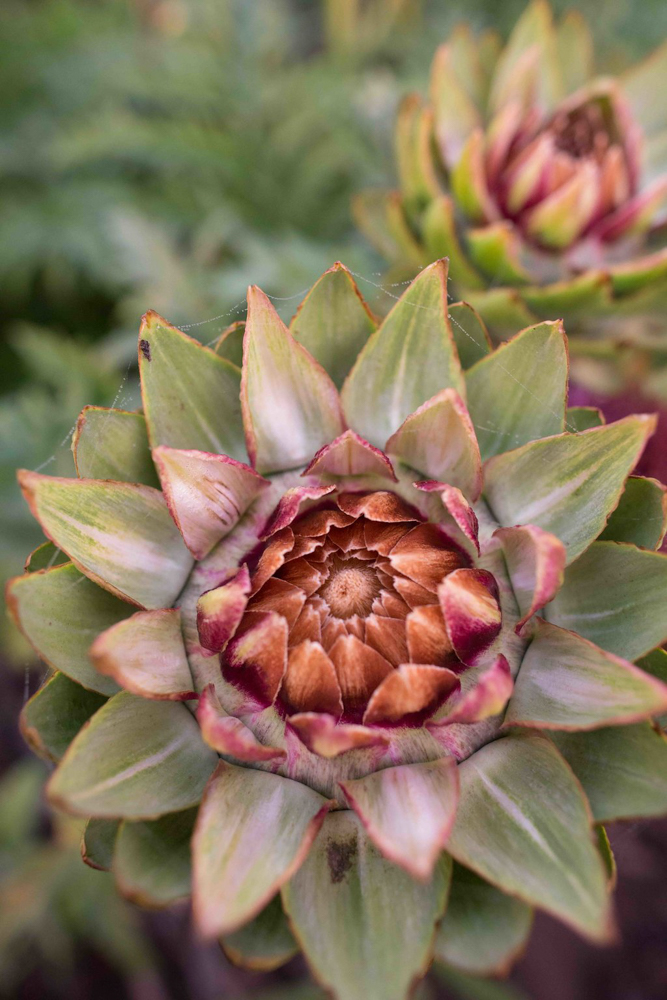
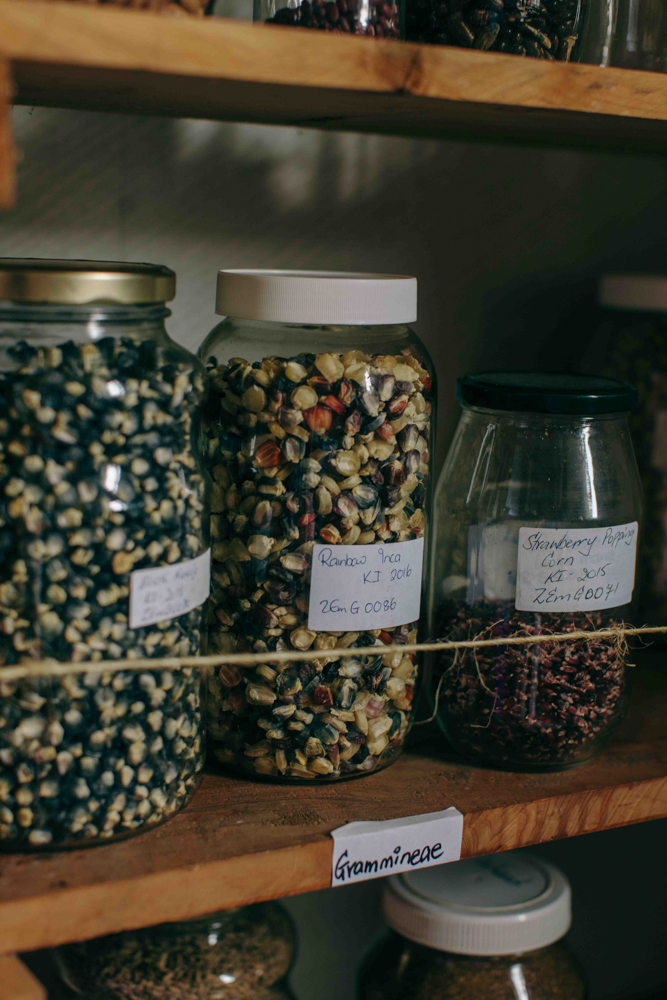
Amber Rose often says that food is her first language. It is not a metaphor she reaches for lightly, but a literal description of how she learned to understand the world growing up near Kaiwaka, immersed in the gardens of her mother, Kay Baxter. Gardens that functioned less like a backyard and more like a living archive of rare food plants. ‘When you’re a kid, you don’t think along the lines of what is this teaching me,’ she says. ‘You just know your lunches are different, that your house doesn’t look like anyone else’s and that the seasons matter.’ Only later did she grasp the scale of what she had been absorbing by default.
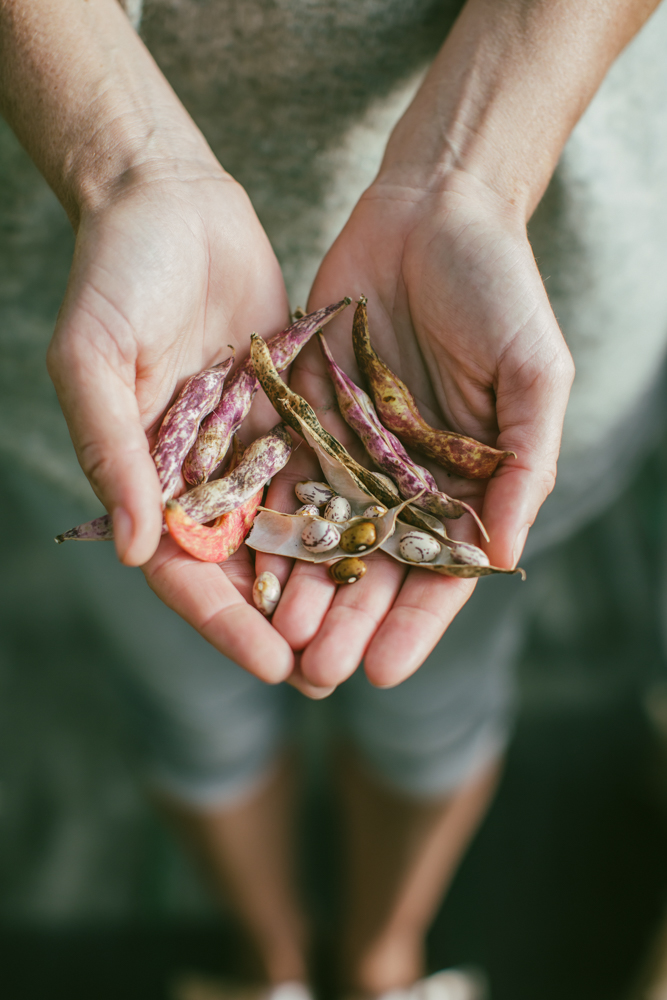
Kay’s gardens and involvement as a co-founder in the Kōanga Institute, New Zealand’s largest heritage seed bank and food plant collection, was a formative education in flavour, patience and abundance. Thousands of edible plants grew there, many unfamiliar, many saved from seed, all demanding attention to soil, timing and care. Working the gardens, fishing, foraging, hunting, fermenting and preserving were a part of everyday life for Amber and her brothers growing up. Amber is contemplative in her reflection on her childhood and the information it instilled in her. ‘For a long time I didn’t give myself credit for the ingrained knowledge I gathered simply by being there,’ she says. ‘It took me a while to realise how much I knew and had to offer.’
-
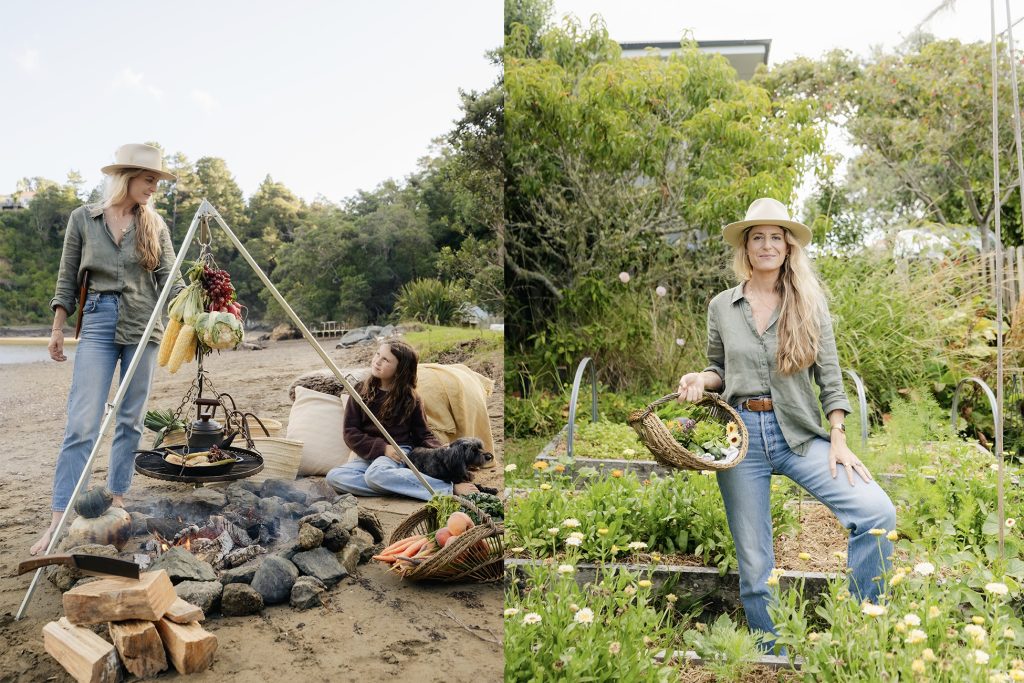
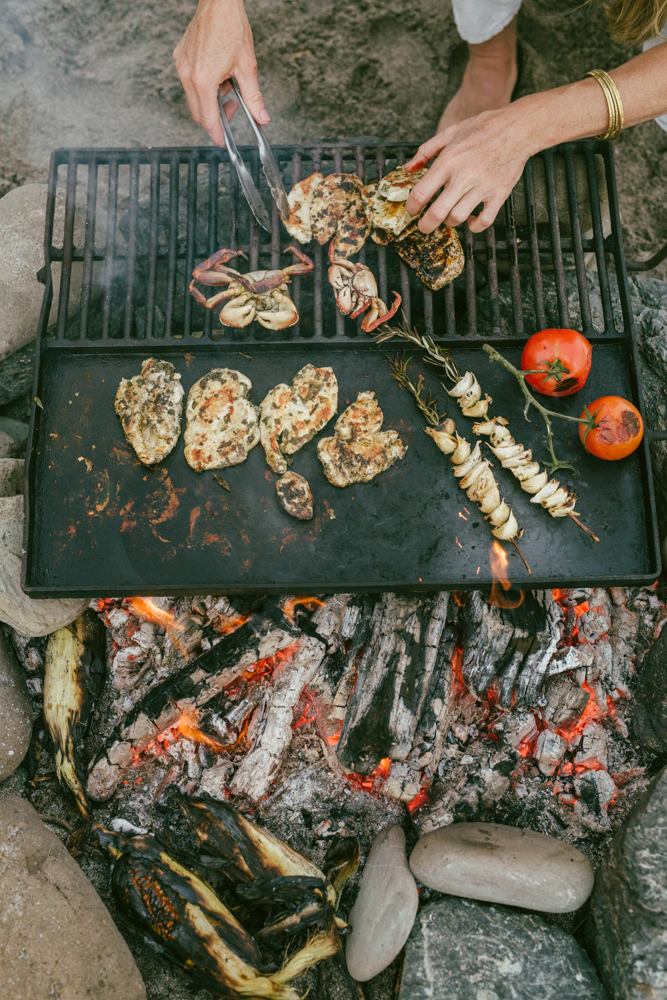
- Amber and her daughter Frankie (9) with Rolly, in their happy place cooking outside over fire.
Honoured in 2018 by the Queen, for services to conservation and sustainable food production – directly recognising her work in the preservation of heritage seeds and regenerative agriculture – Kay’s dedication to these topics greatly influenced Amber’s own understanding of the link between diet and human health. ‘Ancestral practices, deeply rooted in tradition, have been cherished by humanity for generations. By incorporating these traditions – such as fermentation, bone broths, soaking grains, and pairing animal fats to boost nutrient absorption – we can get the most out of our food and thrive within our environment,’ Amber explains. ‘Let food be thy medicine and medicine be thy food. Essentially, by embracing seasonal and traditional whole foods, we not only improve our nutrition but also connect with our local environment, soil and heritage.’
While Amber is now steadfast in her passion to share this understanding and way of life with others, it took time, heartache and numerous challenges to get there; and her path was anything but linear.
-
- Amber’s parents instilled in her a deep love for food and nutrition: ‘My father was a chef and my mother a pioneer in organic horticulture, seed saving and regenerative gardening.’
-
- Amber’s parents instilled in her a deep love for food and nutrition: ‘My father was a chef and my mother a pioneer in organic horticulture, seed saving and regenerative gardening.’
-
- Amber’s parents instilled in her a deep love for food and nutrition: ‘My father was a chef and my mother a pioneer in organic horticulture, seed saving and regenerative gardening.’
-
- Amber’s parents instilled in her a deep love for food and nutrition: ‘My father was a chef and my mother a pioneer in organic horticulture, seed saving and regenerative gardening.’
-
- Amber’s parents instilled in her a deep love for food and nutrition: ‘My father was a chef and my mother a pioneer in organic horticulture, seed saving and regenerative gardening.’
-
- Amber’s parents instilled in her a deep love for food and nutrition: ‘My father was a chef and my mother a pioneer in organic horticulture, seed saving and regenerative gardening.’
After leaving New Zealand to explore the world in the late 1990s, she lived in Melbourne and then China, where she spent a year teaching English and unexpectedly acting in Chinese soap operas. ‘The food is what I remember the most,’ she says of that time. Markets filled with small-scale farmers selling fresh produce left a lasting impression. ‘Even now, I go to Asian grocery stores because I love the variety. It makes you realise how limited Western supermarkets are.’ The experience expanded her sense of flavour and reinforced an understanding that food culture is inseparable from how and where food is grown.
London followed, ushering in a frenetic chapter that saw her working in the world of the rich and famous. ‘Through a friend of a friend I found myself thrown in the deep end as a chef for Jude Law and Sadie Frost,’ she says. ‘I literally walked off the plane and into a completely different world.’ The role developed and grew over the years, seeing her also work as a private chef for Gwyneth Paltrow and Kate Hudson. Work in which Amber drew – often subconsciously – from her roots, creating ancestral recipes to provide a deep level of nourishment.
-

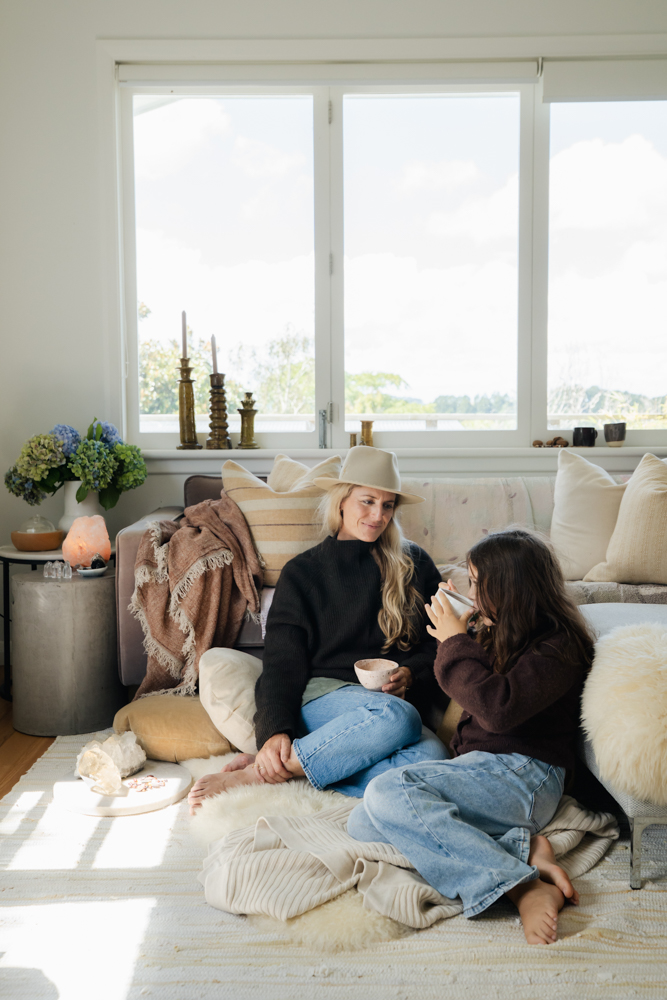
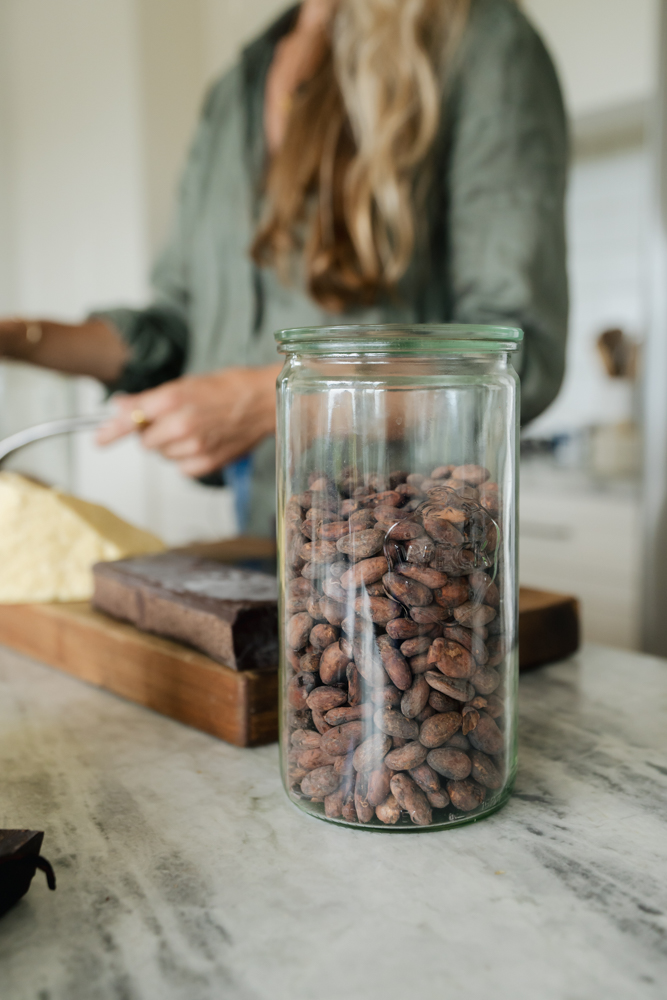
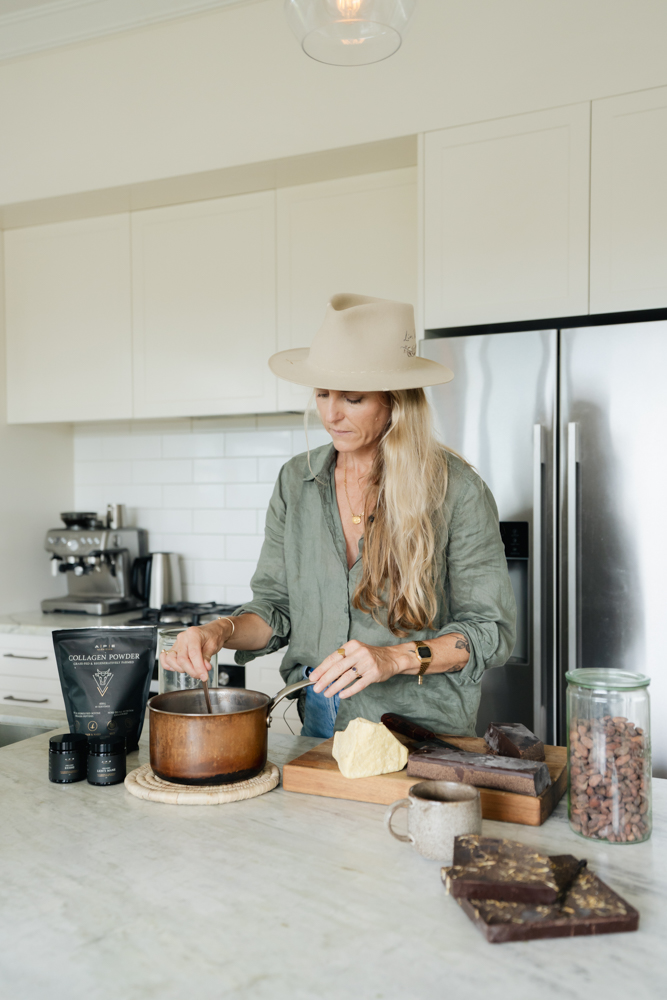
- Despite an international career full of celebrities and fact-paced living, Amber describes her daily life as now being ‘relatively grounded.’ With much of her time devoted to her children, in the kitchen and of course outside growing.
-
- Despite an international career full of celebrities and fact-paced living, Amber describes her daily life as now being ‘relatively grounded.’ With much of her time devoted to her children, in the kitchen and of course outside growing.
-
- Despite an international career full of celebrities and fact-paced living, Amber describes her daily life as now being ‘relatively grounded.’ With much of her time devoted to her children, in the kitchen and of course outside growing.
During this time she also trained and worked as a doula, wrote four cookbooks in five years, styled food for major film sets and cooked in some of the most rarefied kitchens in the world. ‘It was truly bonkers. I was a single mum, burning the candle at both ends, and at the time I just thought that was normal,’ she shares with her trademark laugh. Yet beneath the surface, something felt unresolved. For all the success, she sensed that a crucial piece of the picture was missing.
That realisation would come later, when life nudged her back toward her roots. After returning to New Zealand in 2016, Amber found herself working alongside her mother again, this time with adult eyes. ‘All the stuff I absorbed as a child suddenly became conscious,’ she says. ‘I started really diving into the science of regenerative agriculture, soil health, nutrient density and how that links directly to human health.’ It reframed her understanding of food entirely. What had once been instinctive now had language, structure and purpose.
She began to see the food system through two contrasting paradigms. ‘There’s an industrial model, which is extractive and top-down,’ she explains. ‘And then there’s a regenerative model, where you’re in service to life and there’s reciprocity in everything you do.’ The distinction was not theoretical. Amber had experienced burnout firsthand while operating within systems that treated people, land and creativity as resources to be depleted. Regenerative agriculture offered a different way forward – one that aligned with how she had grown up, even if she hadn’t always named it as such.
Food, for Amber, is medicine in the most practical sense. When she experienced autoimmune illness and severe burnout, she turned to fermentation and deeply nourishing food as part of her recovery. ‘Stress is incredibly inflammatory,’ she says. ‘So I focused on regulating my nervous system, eating clean, adding probiotic rich live ferments and really nourishing myself.’ What began as a personal experiment soon drew wider interest. Her ferments won national awards, praised not only for their health benefits but for their flavour. ‘Not everyone who makes products is a foodie,’ she says. ‘That’s where the palate comes in.’ Flavour, she believes, is the bridge between health and pleasure. It is also where regenerative farming reveals itself most clearly. ‘Healthy soil creates healthier plants,’ she says. ‘They’re more nutrient-dense, and that goes hand in hand with flavour. We don’t always realise that the quality of the soil is what’s giving our food depth.’ Her work now seeks to make those connections visible, telling the story of ingredients from the ground up rather than treating them as anonymous inputs.
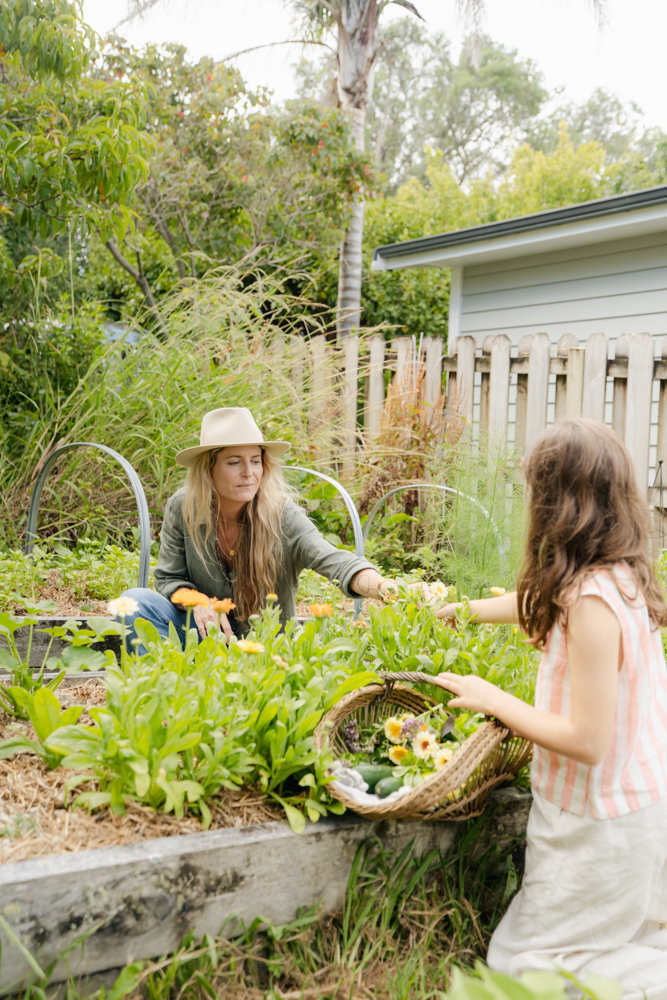
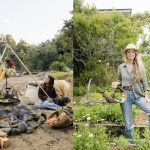
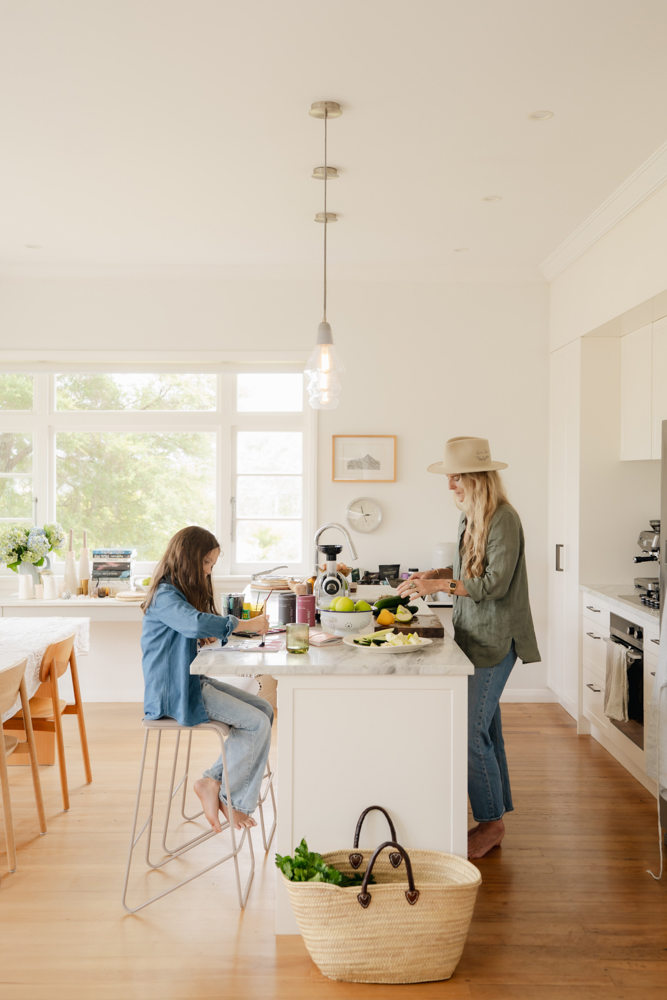
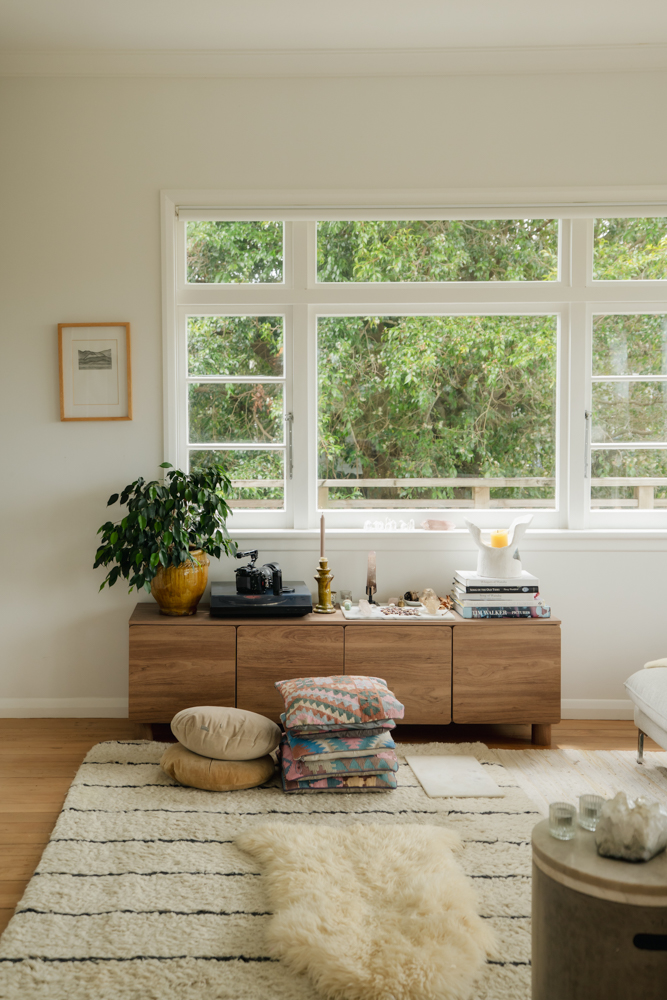
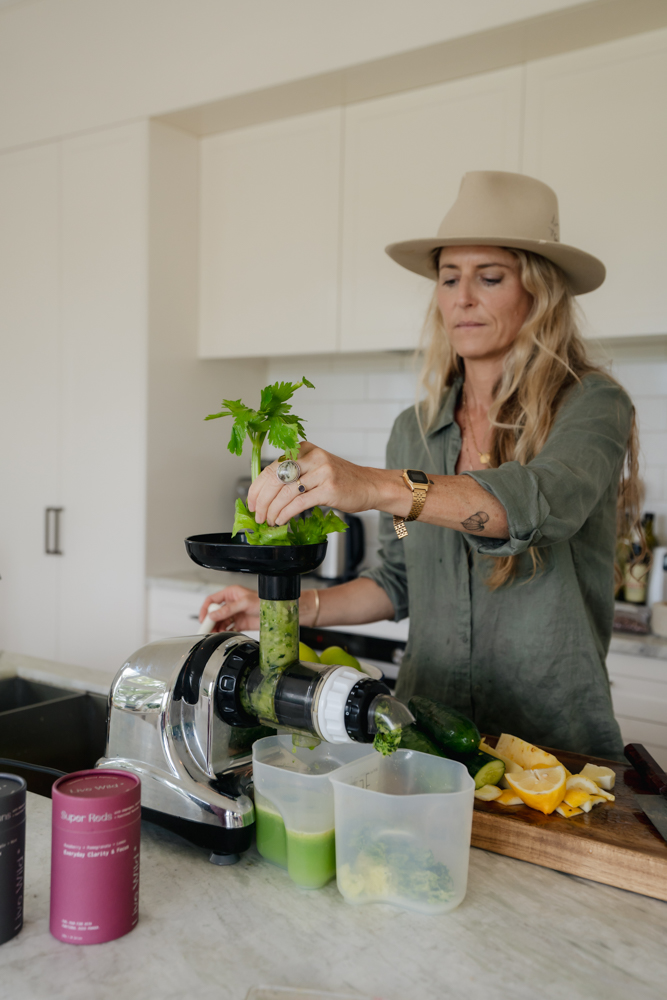
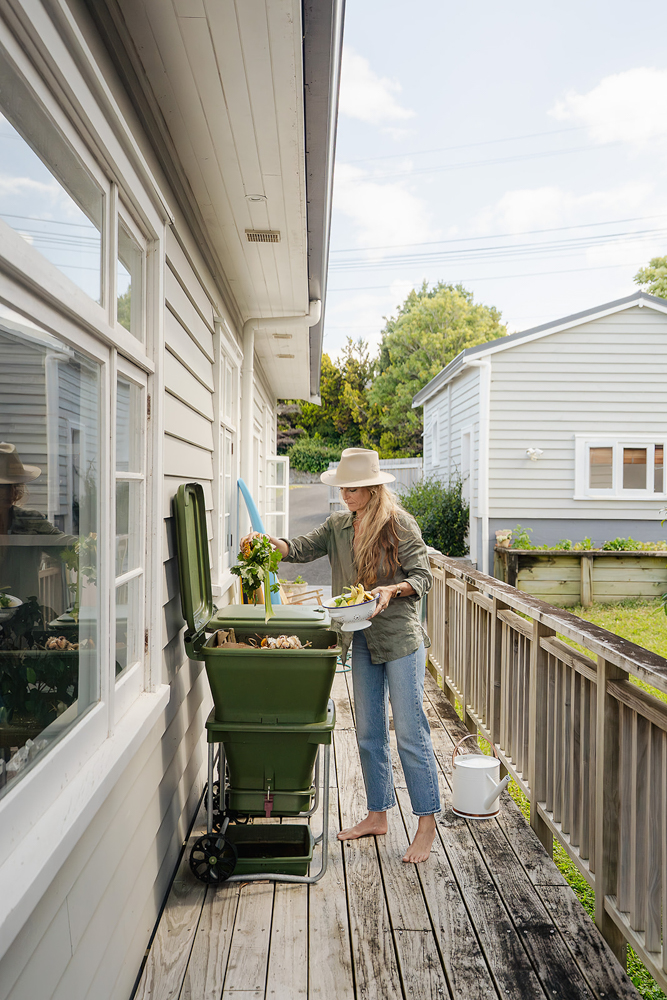
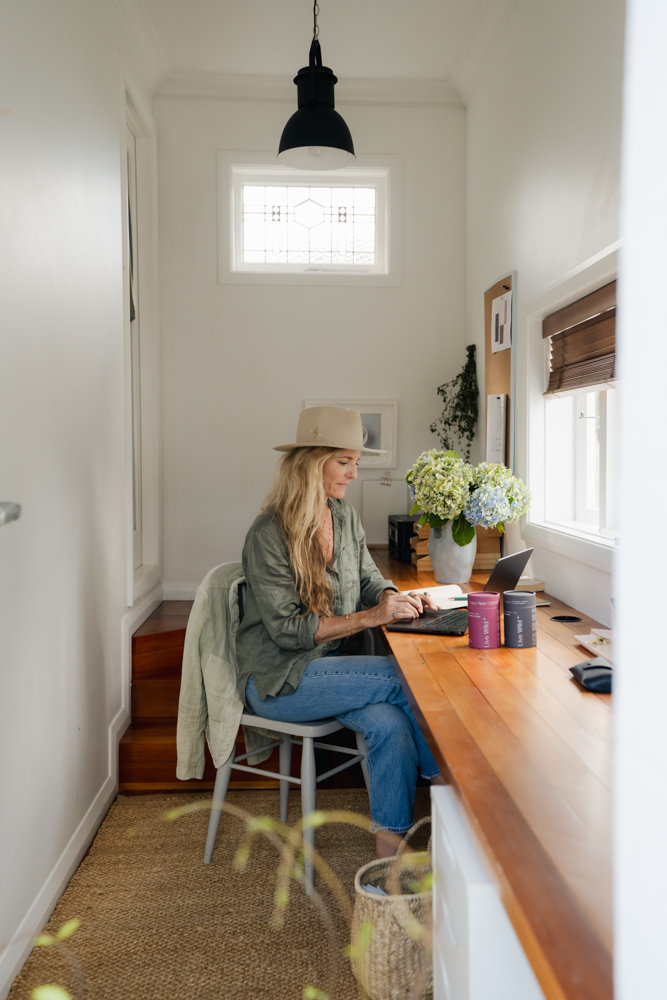
Despite her global career, Amber’s daily life is now relatively grounded. She lives in Warkworth with her children Ollie (20) and Frankie (9), works mostly from home and grows food in her garden. During Covid lockdowns, she dug up half her lawn to plant vegetables. ‘It’s a suburban house,’ she says, ‘but it overlooks the valley, and I love it.’ Her days are shaped by a rhythm that prioritises movement, time outdoors and food prepared with intention. It is a way of living that mirrors the values she promotes through her work.
Travel still plays a role, particularly time spent in wild places. Trips to Stewart Island, where she cooks and fishes offshore, have had a profound impact. ‘Being in those wild spaces rewires something for me,’ she says. ‘Nothing compares to that level of connection with nature.’ It has reinforced her belief that modern life has pulled people too far from source – from land, from food, from each other. Her response is not nostalgia, but integration: bringing those elements back into daily life in ways that are practical and sustaining.
Throughout her career, Amber has returned again and again to storytelling. It is a responsibility she takes seriously. Whether through food, education or conversation, her aim is to help people understand the systems that sustain them – and their role within those systems. ‘Human health and planetary health are completely interconnected,’ she says. ‘Once you see that, you can’t unsee it.’
In many ways, her life has come full circle. The gardens she once took for granted now underpin her philosophy and practice. Heritage seeds, once simply part of childhood, are recognised for what they are: vessels of resilience, flavour, memory and culture. ‘I feel like everything has led me to this point,’ she says. ‘Even the hard things.’ Her work today with her Live Wild products and daily practices is less about chasing novelty and more about deepening connection – to land, to food, and to the quiet wisdom carried forward through generations.
-
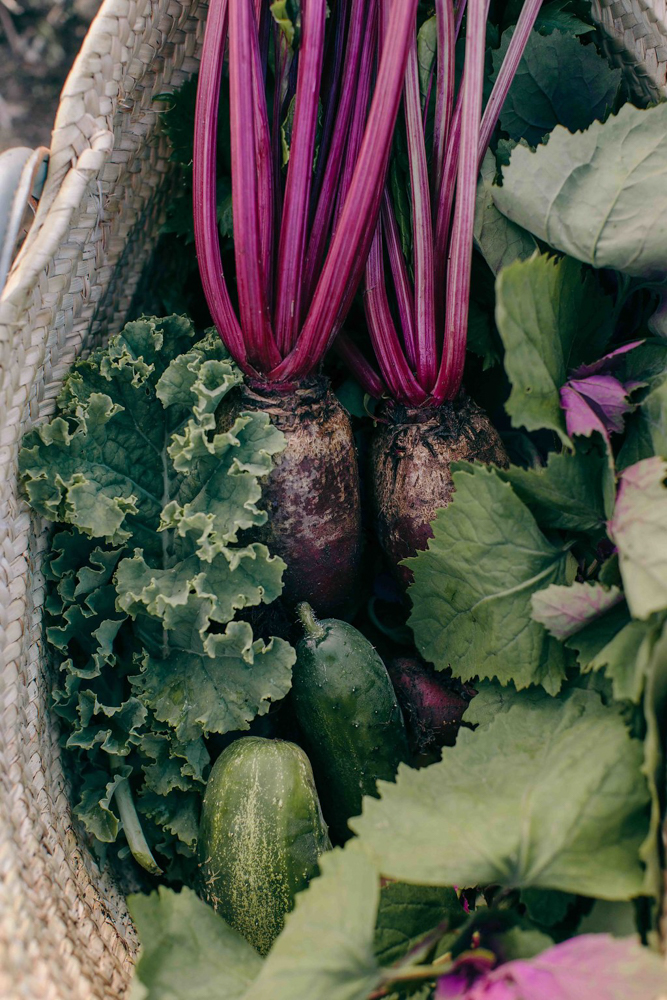
- While vastly different from the expansive gardens of her childhood, Amber and Frankie have transformed their suburban landscape into a vibrant abundance of produce.