Wildly Intentional
Small-scale flower farms are growing in numbers across the country – and for good reason. We head inside the world of cut flower farming in the sun-drenched Upper Clutha Basin.
Words Lucinda Diack Photos Camilla Rutherford
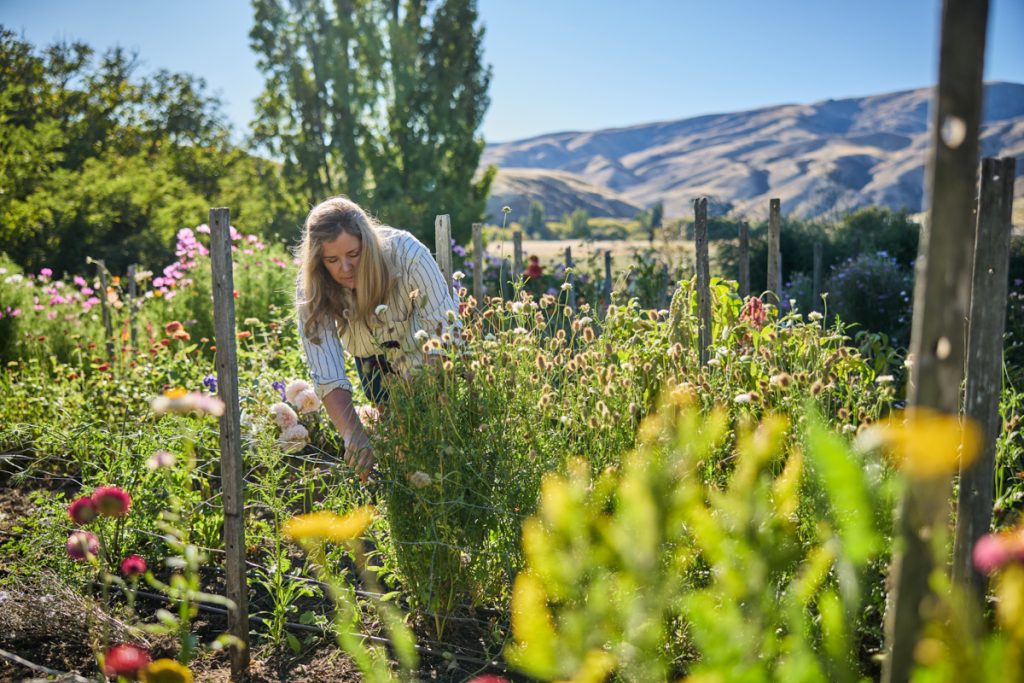
In the early morning light, before the nor’wester has a chance to pick up and the heat settles into the valleys of Central Otago, Sarah Rutherford and Jen Clark are already in their gardens. Yet these are not gardens like you and I have in our backyards, but dedicated ‘cutting patches’; rows of blooms curated and tended by these dedicated growers to be shared with their friends, family and communities.
These two women, along with friend and colleague Vera Yakzhik, are part of a growing movement of small-scale flower farmers across Aotearoa who are reshaping how New Zealanders think about flowers. Their patchwork flower beds produce blooms that are markedly different from the tightly uniform bunches found in retail outlets. Here, flowers grow with the weather, the soil and the realities of their location: long winters and intense summers.
None of these women grew up imagining a future in flower farming; instead their paths to the garden were shaped by career changes, a desire for work that felt tangible and a shared longing to spend more time outdoors.
While they all grow long lists of beautiful blooms, Jen’s dahlia patch is unrivalled; Vera predominately grows peonies and annuals and Sarah, perennials, bulbs and other treasured garden favourites that aren’t always easily attainable from the flower market due to their location.
Sarah laughs as she recalls how her growing journey began as a side project during lockdown under the Instagram handle, The Joy Farmer. ‘I wanted to try something new that connected me with being outdoors and fellow creatives,’ she explains. ‘It was just meant to fill a short term void … however, once you start growing flowers, you can’t really stop,’ she laughs. ‘You start thinking in seasons rather than months.’
-
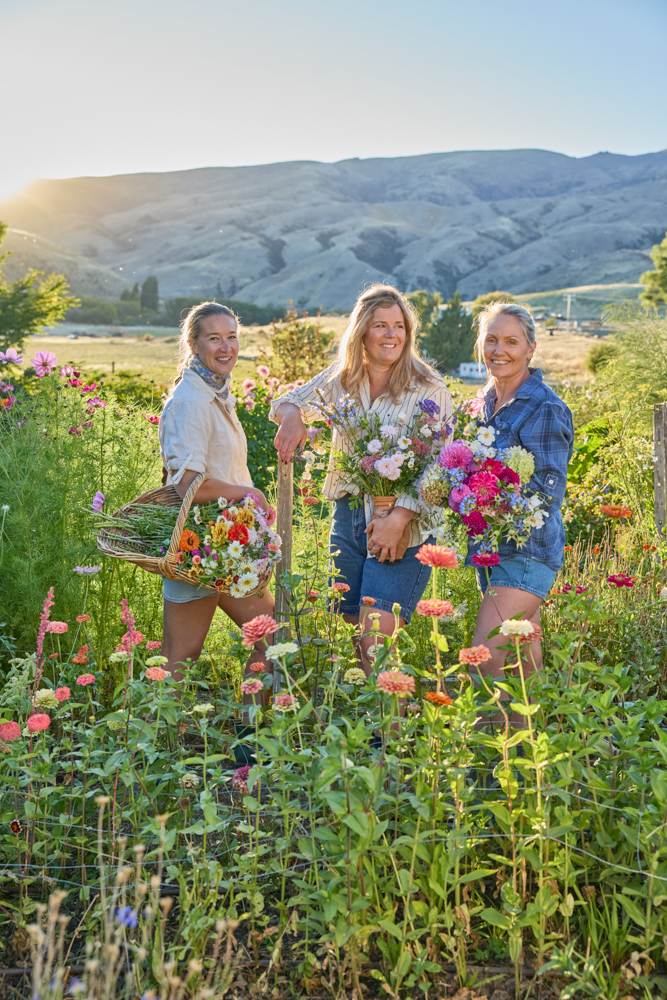
- Vera Yakzhik, Sarah Rutherford and Jen Clark are part of a growing movement of small-scale flower farmers across the country. Their collective, Three Valley Flower Farms, allows them to achieve sustainable routes to market, support each other during peak time and provide a variety of blooms to their customer base.
Just like those growing produce and meat, farming flowers means working closely with the soil and land around them. For Jen and Sarah this means an awareness that frosts linger well into spring, and snow is never far from the forecast. Summers are short but intense, with long days and strong sun pushing plants to grow quickly. ‘You can’t fight this climate,’ Sarah says. ‘If you try to force things, you lose.
The garden always wins. Instead you have to work with it.’
A reality that has shaped what they grow and when, favouring hardy annuals, perennials and bulbs that thrive in cooler nights and bright days. Hence seasonality sits at the heart of their approach. In early spring, the first signs of life come through hellebores, tulips and delicate ranunculus. By summer, the gardens are full and generous, with cosmos, zinnias, sweet peas and sunflowers taking their turn. Autumn brings deeper tones and textured seed heads, while winter is a time for planning, soil care and rest.
‘People are so used to having everything all the time,’ Jen says. ‘But flowers aren’t meant to work like that. Waiting is part of the reward. If something isn’t ready, it isn’t ready,’ she continues. ‘That’s part of the beauty.’
Their work is deeply grounded in soil health and observation. Compost is built slowly, beds are rotated, and planting plans are adjusted each year based on what succeeded and what struggled. Pests are managed with timing and diversity rather than sprays and the presence of insects and birds is seen as a sign of balance rather than a problem. ‘If the garden feels alive, you’re doing something right,’ Jen says.
Selling flowers locally has also shaped how they grow. Rather than chasing scale, the trio supply a small number of florists, markets and customers who value seasonal blooms and are willing to adapt their expectations. Their drive-by blooms (roadside stalls), are particularly popular with those passing by and a great alternative to those who typically pop to the supermarket to buy some floral joy. ‘As the gardens evolve through the season, the flowers change,’ explains Sarah. ‘There is such simplistic joy in being able to share this with people.’
-
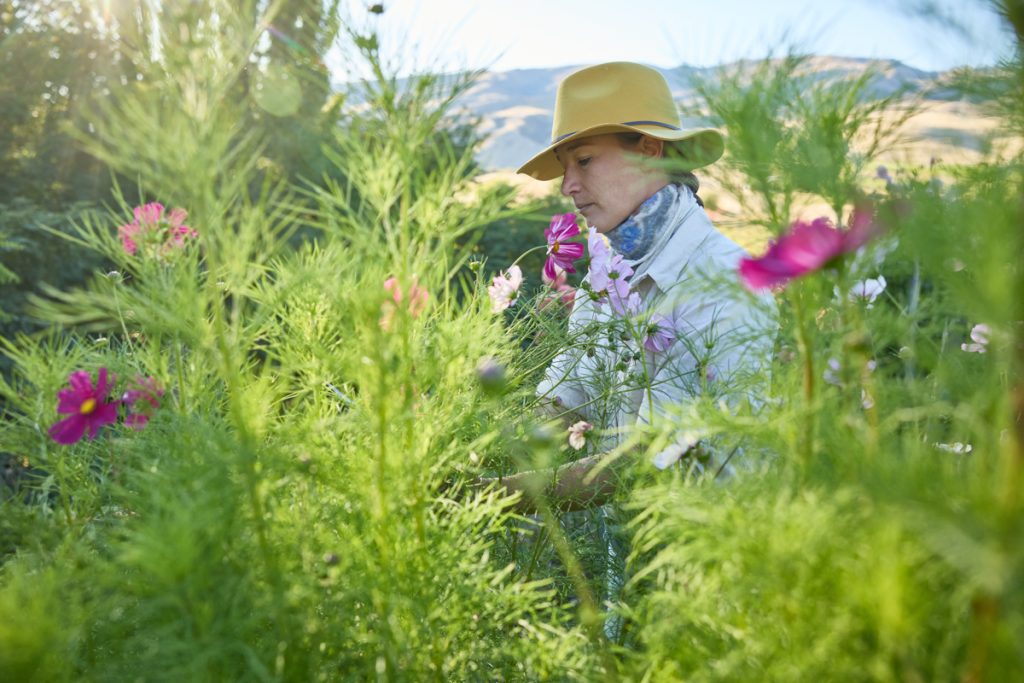
- Vera Yakzhik of Alpine Blooms Farms, harvesting amongst the cosmos.
-
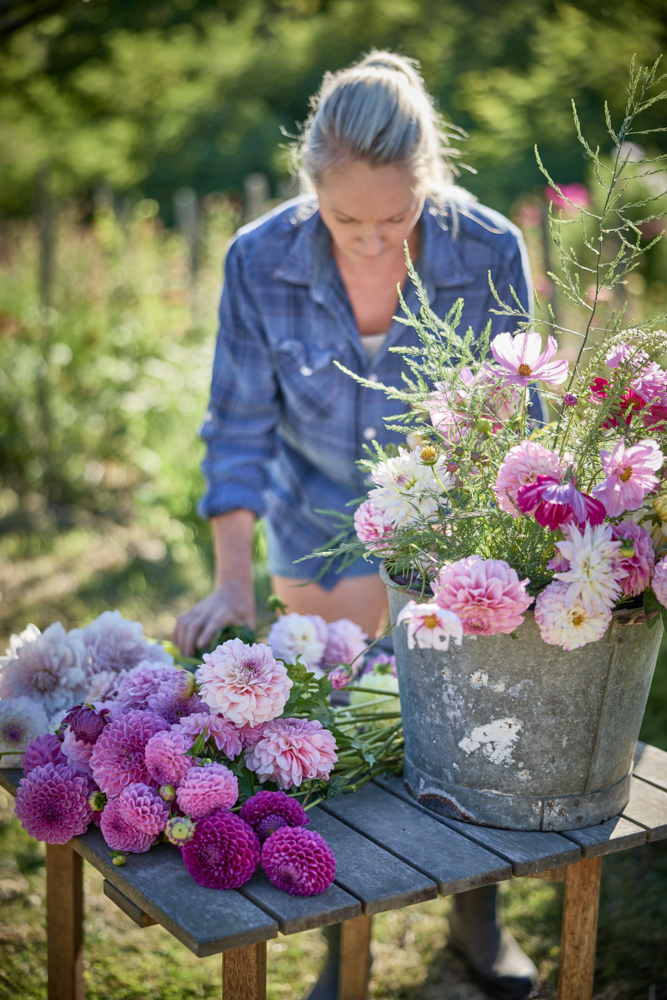
- Jen Clark of Studio 24 Botanicals’ dahlia patch is unrivalled.
-
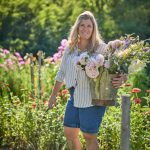
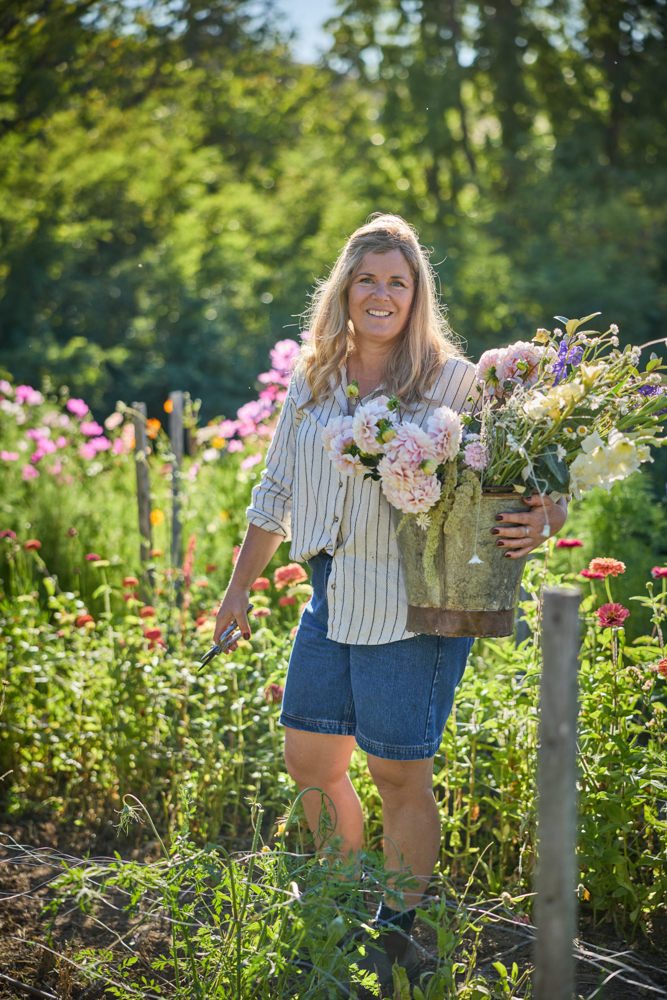
- The Joy Farmer, Sarah Rutherford with the day’s harvest.
This means bunches change week to week, and colour palettes are dictated by what is flowering rather than by trend. ‘Sometimes people ask for something specific and we just have to say no,’ Sarah says. ‘But more often now, they are asking “what’s good this week?” And that feels like a shift. They are excited by what’s available, not what they think they should have.’
The rise of flower farming in New Zealand reflects a broader reconnection with gardening as both craft and livelihood. From Northland to Southland, growers are reclaiming flowers as part of productive landscapes, integrating them into lifestyle blocks, backyards and regenerative farms. Social media has played a role, but so has a deeper desire for beauty that feels honest and local.
For these growers, the garden is not just a workplace but a way of life. Their days are shaped by weather forecasts, seed trays and harvest windows. There are setbacks, crop failures and seasons that don’t behave as expected, but there is also a profound satisfaction in watching something grow from seed to stem.
As flower farming continues to find its place in New Zealand’s growing culture, growers like Sarah and Jen are quietly changing perceptions. By inviting people to think about seasonality, origin and care, they are reminding us that flowers, like food, are part of the natural cycles around us. Chosen thoughtfully, they carry not just beauty, but meaning, and a connection to the land around us.
From wildflower paddocks to meticulously tended rows, Aotearoa New Zealand is home to a wealth of flower growers consistently inspiring us with their beauty, creativity and connection to place. We encourage you to stop, shop and enjoy the beauty of locally grown blooms.