Learning to Listen
After Lyme disease unravelled the life she’d built in Bali and Ibiza, Nadja van Osch returned to her husband’s home on the remote Chatham Islands to do the one thing she’d never let herself do – stop.
Words Lucinda Diack Photos Francine Boer
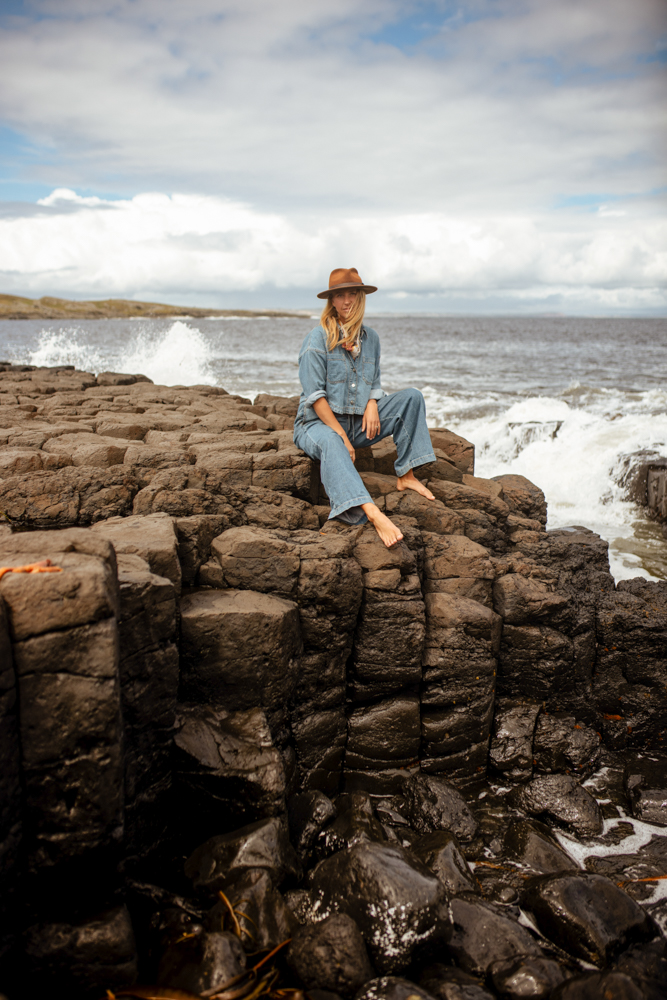
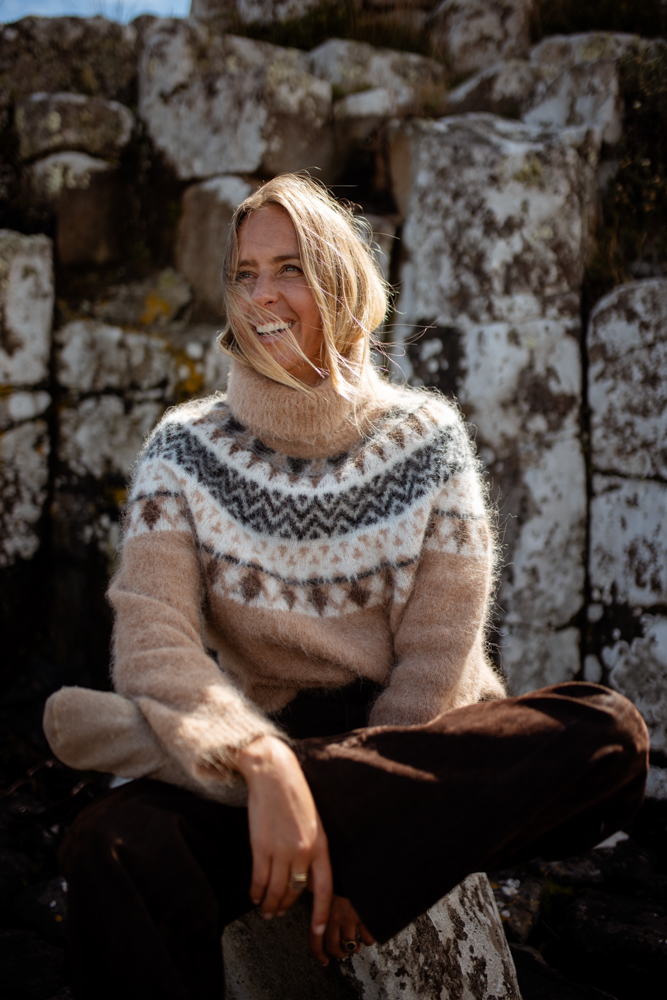
Nadja van Osch has learned the hard way that a life which looks beautiful from the outside can be quietly falling apart on the inside. The Dutch-born author, therapist and mother of three, spent a decade building what she calls ‘a beautiful flourishing business,’ whilst raising three children across Bali and Ibiza and writing a bestselling book – all while running, unknowingly, on empty. ‘Life from the outside looked beautiful,’ she says. ‘I could have never imagined my life becoming so beautiful. But internally, I was just exhausted.’
That exhaustion had a name, though it took 30 years to find it: a severe case of Lyme disease, layered with co-infections including babesia and bartonella, which had been quietly flooding her system – and, as she puts it, her brain – for years. ‘The specialist had worked with people with Lyme disease for a number of years and couldn’t believe I was still functioning,’ she recalls. ‘The people he had seen previously with these results like mine came in-in wheelchairs. I remember him asking me how I was running around the world making babies and writing books.’
A Love Story That Began by Accident
Nadja’s path to one of the most isolated inhabited places on earth started, fittingly, on a date with someone else entirely. Twelve years ago, on a night out in Bali, she was ready to leave a dinner she wasn’t enjoying when a friend of a friend joined the table. ‘That was it,’ she says. ‘Love at first sight.’
That man was Robbie, a photographer and, as she discovered, perhaps initially naively, from the Chatham Islands – a scattering of islands roughly 800 kilometres east of mainland New Zealand, home to around 600 people. ‘He would say things like, ‘Oh, I’m from an island.’ And I’d think ‘that’s cool, I love islands,’ she laughs. ‘I was very oblivious to where he actually was from.’
The couple settled first in Bali, where their eldest son was born, before a volcanic eruption prompted an abrupt relocation to Robbie’s homeland. Nadja still remembers packing her suitcase with dresses for the trip. ‘Robbie kept saying ‘You won’t be needing those.’
Arriving on the Chathams for the first time, a lifelong vegetarian from urban Holland, Nadja was confronted with a new reality. ‘Living here you live from the land. If the supply boat hasn’t been and there is nothing in the garden, there might be only one tomato. I had to face the reality that I couldn’t live like that.’
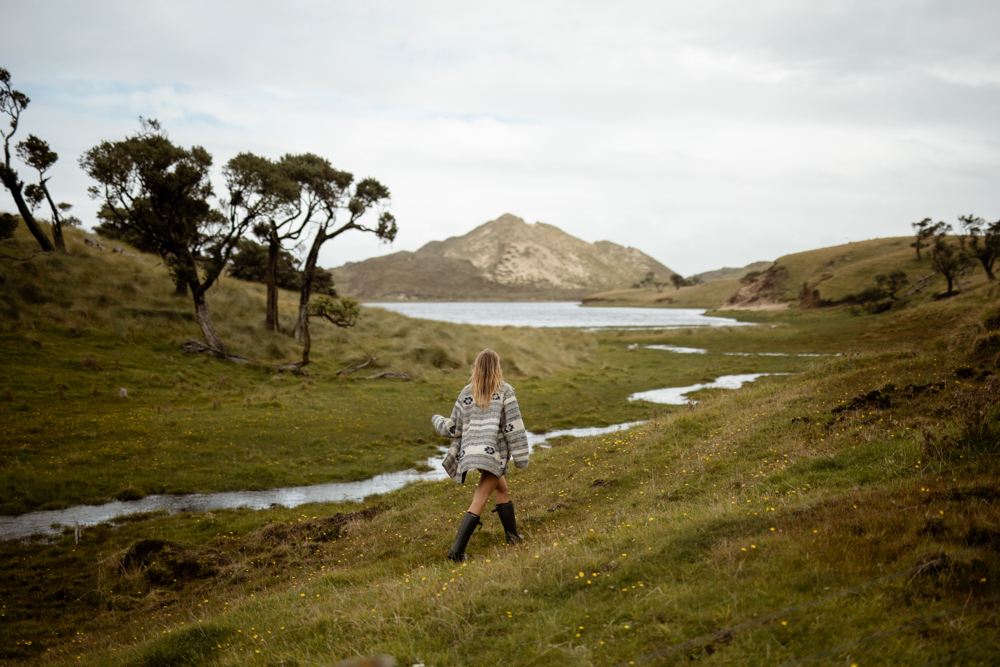
For a long time, Nadja describes feeling like an ‘alien’ on the island – but over time she has come to appreciate the way of life that is found here. ‘Living here I have come to understand the ecosystem so much better. We take what we need, and only what we need. From the ocean and the paddock, and we utilise every part of it. Sometimes it feels like you have to go backwards when you live here, but in a way, it’s also the way forward.’
When the Body Says Stop
For years, the family moved between the Chathams and a life built in Ibiza, where Nadja ran her coaching business online and wrote her first book, Love Revolution. But roughly two years ago, the chronic fatigue and mysterious symptoms she had ‘normalised’ for years finally caught up with her. ‘One day I just wasn’t ok,’ she says. ‘I couldn’t get out of bed anymore.’ The instinct, she admits, was to simply fix it. ‘That’s who I am, and who we are as high-achieving, go-getting women – we’re extra prone to it, because it’s a nervous system pattern. We survive by being the one who handles it all.’
It took four months for the Lyme disease to clear from her blood, but healing her body was only the beginning. ‘What actually happened was my body was living in an infection for so long that I had dissociated so much,’ she explains. ‘As the Lyme disease left my body and I could reconnect with my physical self, I went from someone who could handle everything to someone who couldn’t handle anything.’ Losing her health, she says, meant losing far more: her business collapsed, debt mounted, and the family was forced to leave their life in Ibiza and return, indefinitely this time, to the Chathams to rebuild.
Stillness as Medicine
That return marked the hardest chapter yet – not the island’s physical hardship, but its total absence of distraction. ‘There’s nothing new to distract yourself with,’ she says. ‘It was also a loss of identity. Who am I if there’s no project, nothing to achieve, nothing to distract myself with?’
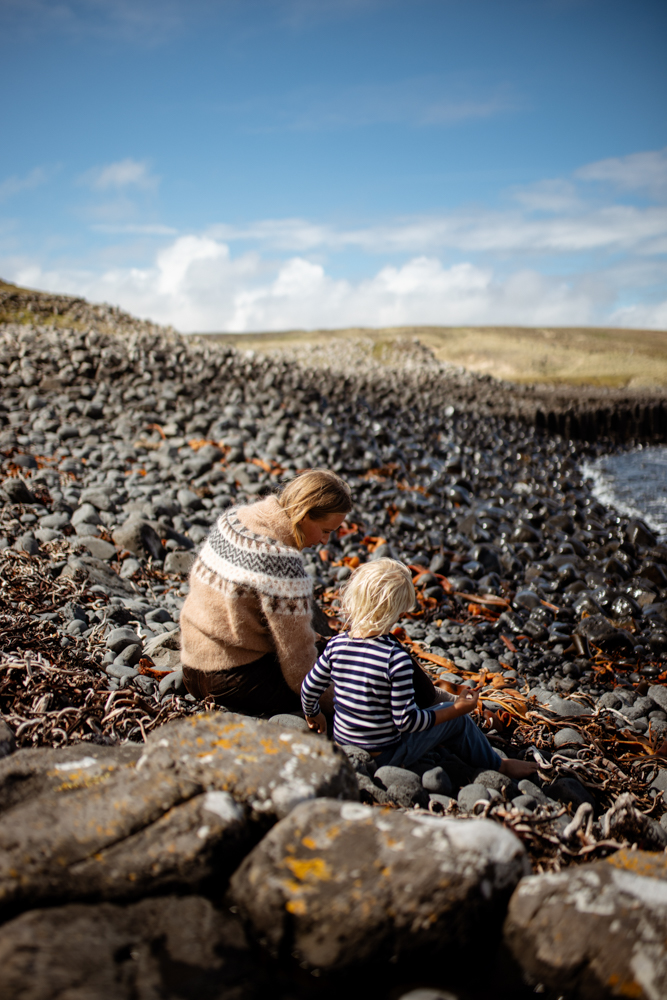
Now a year into that indefinite stay, Nadja describes slow, uneven progress: sitting ‘next to the same tree, the same sheep, the same river,’ and learning, gradually, to come back into her body rather than override it.
It’s this experience – the intersection of nervous system science, unprocessed trauma and physical symptoms – that now shapes the wellness programme she is rebuilding from her dining table, overlooking the ocean. ‘It’s not necessarily ‘how do I fix it’,’ she says. ‘‘It’s ‘what is my body trying to protect me from’. It’s about bringing together the somatic and the emotional: fascia, mitochondria and nervous system to heal as a whole. To rediscover my who.’
Knowing she isn’t alone, Nadja is contemplative when thinking about what is next. ‘I don’t know, but there is definitely another book that will explore bringing all of this together.’ There is no doubt that this powerhouse of an individual is rebuilding stronger than ever and set to share her learning with us all.
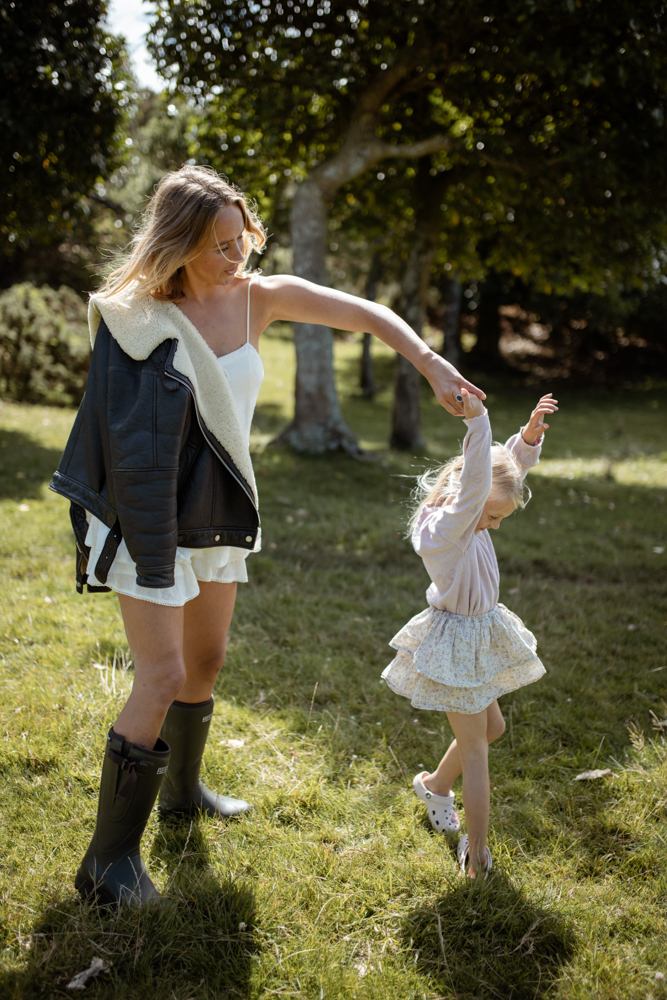
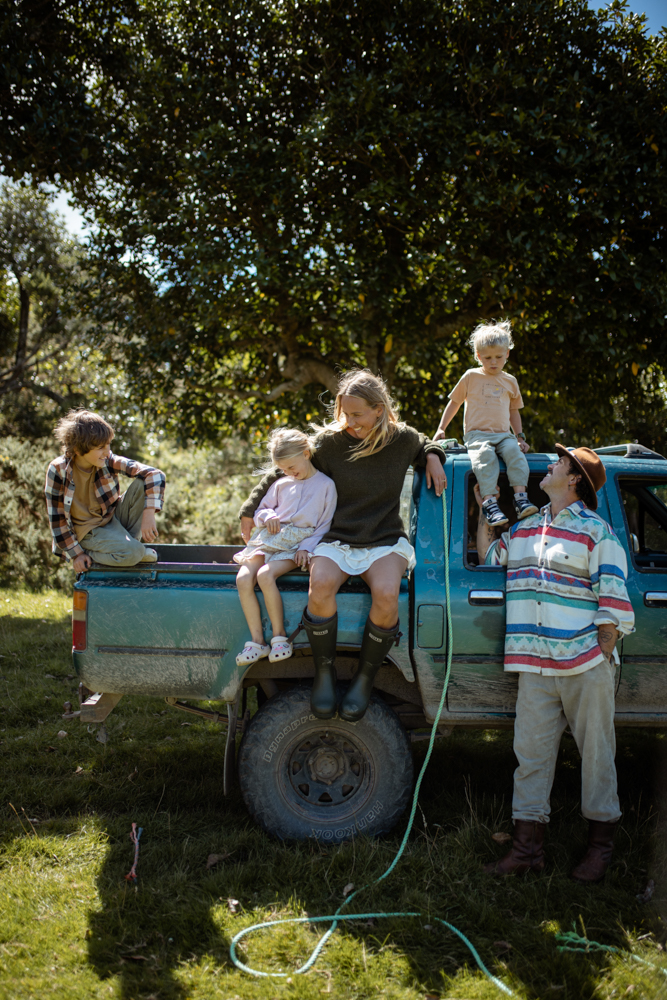
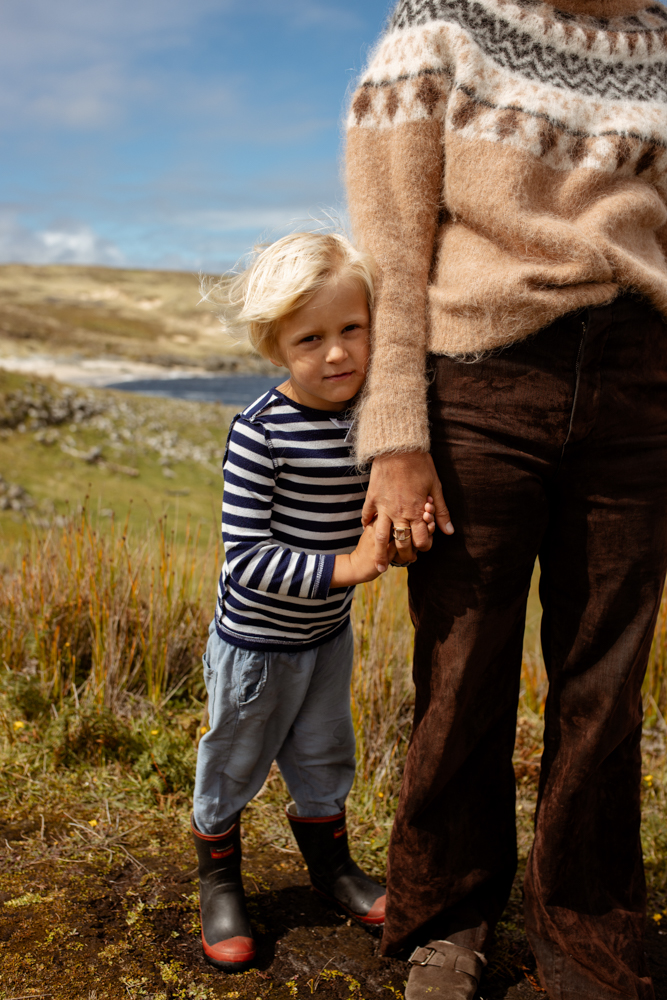
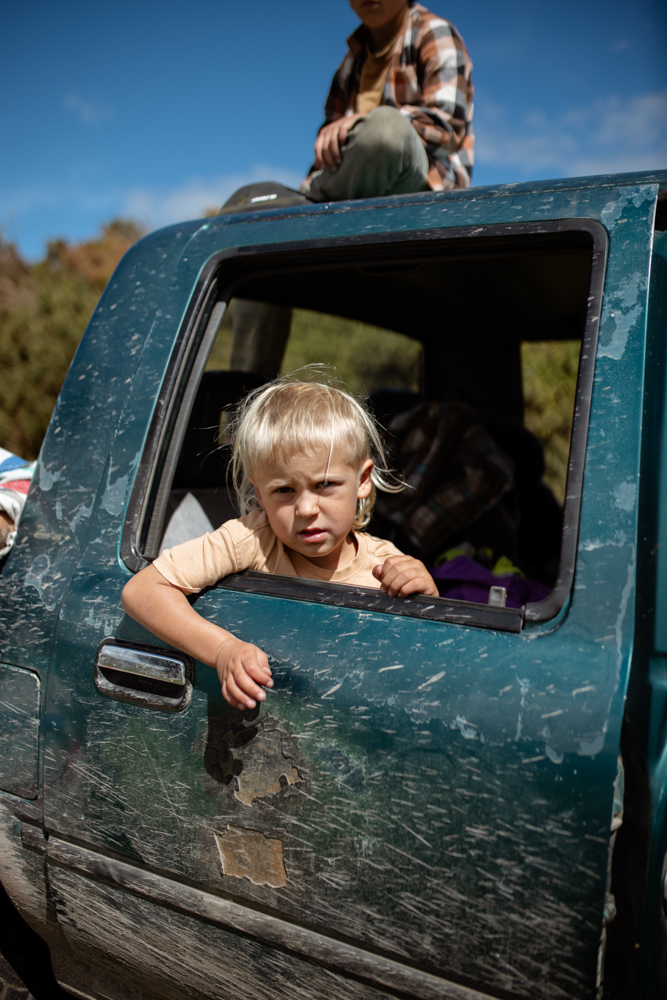
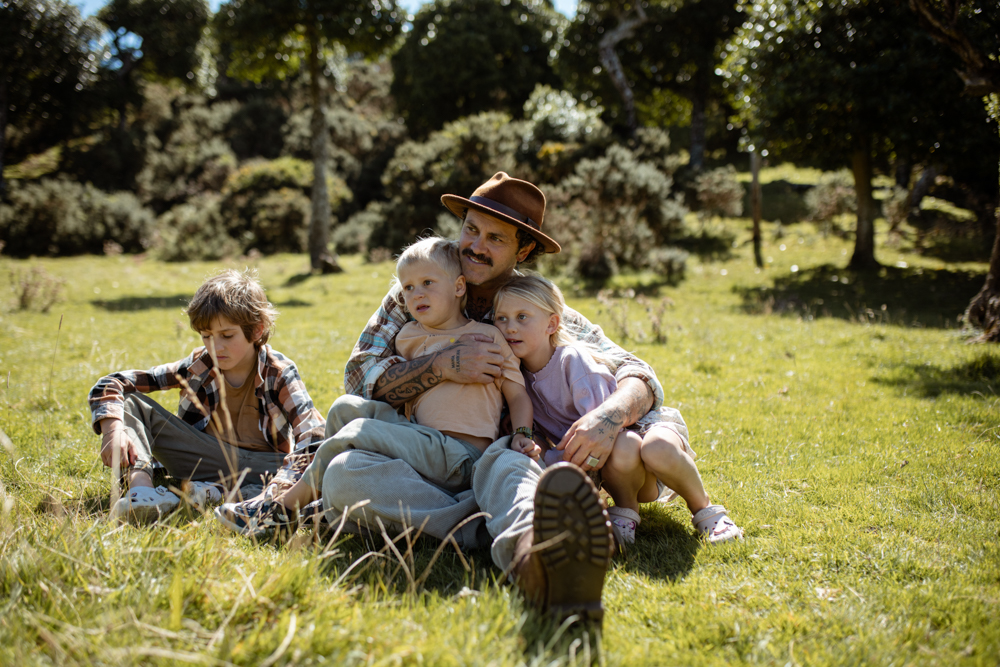
Life now follows the rhythm of the school bus and the tide. Robbie, who is working on a long-awaited photography book about the Chathams while designing clothes and working at the local school, drops their three children — aged four, six and nine — at Kōhanga and Te One School each morning; while Nadja spends time in nature and working through slowly rebuilding her business before the children return from school. They then spend the afternoons and evenings playing with their cousins until dinner. ‘They run wild and there is something very free about the way they are growing up. We could learn from that.’
Her advice for anyone facing challenges and even life in a new unfamiliar environment is simple: stop resisting it. ‘Every environment can be a beautiful teacher and also a beautiful trigger,’ she says. ‘Feel the resistance that it brings up, as this is the opening to something deeper. If you choose to surrender to it, which is a daily practice, it teaches you the value of slowing down.’ For that is where the magic is.
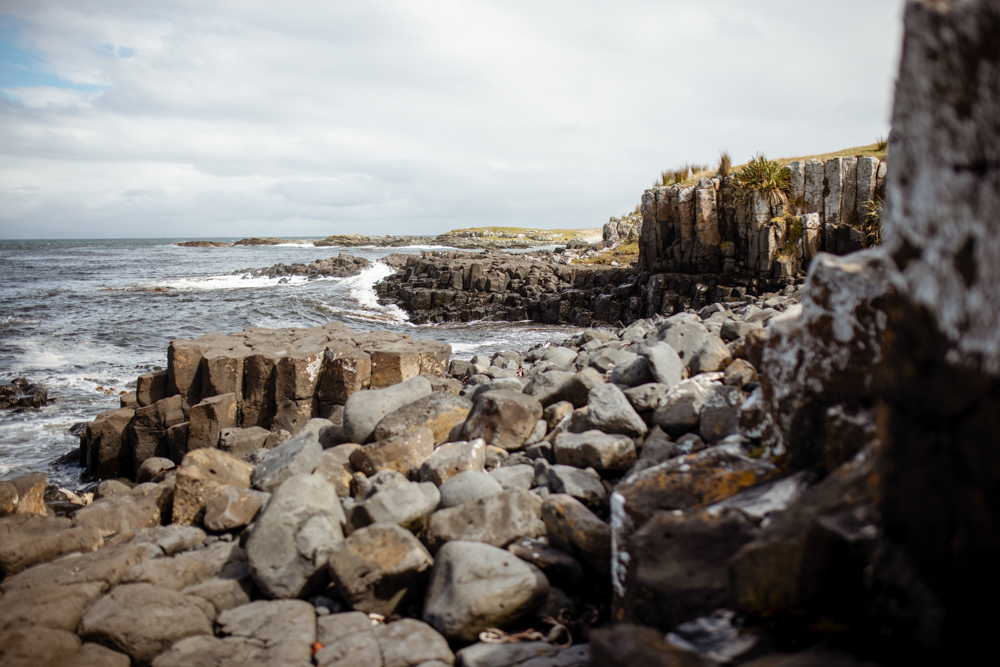
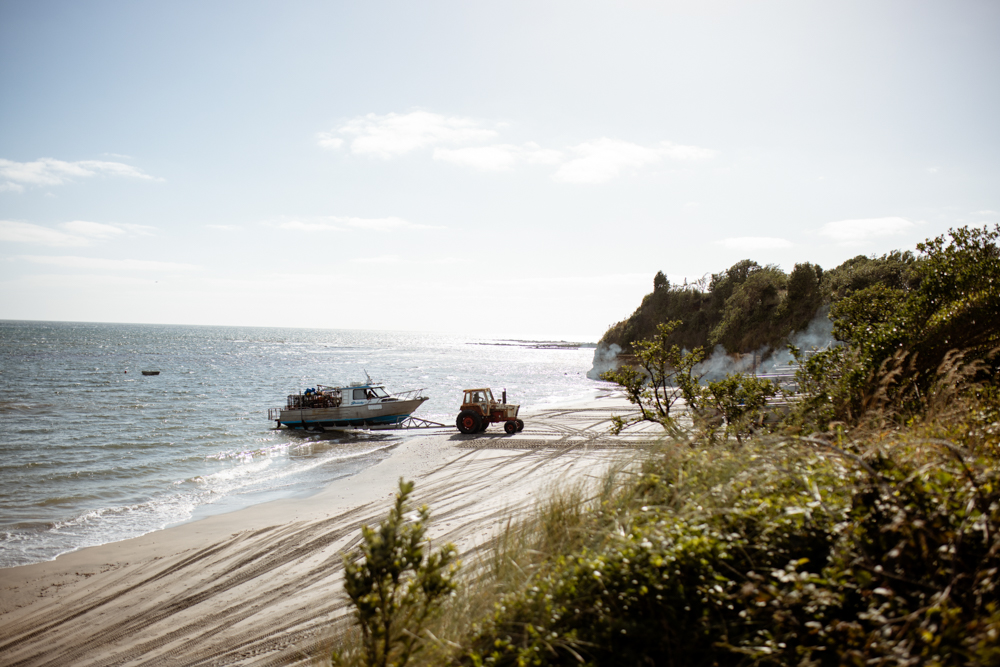
The Chatham Islands With Nadja van Osch
Get to Pitt Island. ‘If you have the opportunity to get there, do it,’ Nadja says. Smaller and even more remote than the main island, Pitt has, in her words, ‘a magic that’s unheard of.’ Flights and boat crossings are limited, so it takes planning – but she rates it as the standout of the whole archipelago.
Seek out the basalt columns. Dramatic volcanic rock formations rising from the coastline, these are, Nadja says, ‘very beautiful, very special land’ – a striking detour for anyone exploring beyond the main settlements.
Skip the itinerary, find the locals. For Nadja, the real drawcard isn’t a sight at all. ‘Just hang out with the people, hang out with the locals,’ she says. ‘That’s probably the most interesting and fun bit of the whole Chathams.’ With a population of around 600, community life is the island’s defining feature – and its warmest welcome.
Wellbeing Wisdom
Stop trying to ‘fix’ it. Chronic fatigue, anxiety and unexplained symptoms are often the body stuck in survival mode, Nadja says – not a problem to override. ‘The question isn’t necessarily how do I fix it? It’s way more about what is my body trying to protect me from?’
Watch for the ‘handle everything’ pattern. High-achieving, self-reliant women are, in Nadja’s experience, especially prone to burnout precisely because they’re so good at pushing through. ‘We survive by being the one that handles it all,’ she says. ‘Eventually your body is just like – if you don’t want to listen, I’ll make you listen.’
Cooperate with your body, don’t override it.
Rather than silencing symptoms, Nadja encourages tuning in to what they’re signalling. It’s a shift from control to communication – a starting point, she says, that ‘will bring you to
the right direction.’
Let your environment be a teacher. New or unfamiliar surroundings will surface things you didn’t know you were carrying, and that’s the point Nadja says. ‘Every environment can be a beautiful teacher and also a beautiful trigger.’
Expect resistance – then let it go. Discomfort in a slower, less distracted life is normal, not a sign you’re doing it wrong. ‘Every time I come here, I’m just in massive resistance,’ Nadja admits, ‘until I drop the resistance and surrender to it.’