Forever In Bloom
There’s a resurgence underway in one of the gentlest crafts there is, and it begins with a book you already own. From her Wellington studio, Carolyn Austin of Forever Floral Press, turns bridal bouquets, memorial flowers and garden cuttings into artworks built to outlast the occasions that made them by decades.
Words Sarah Perriam-Lampp
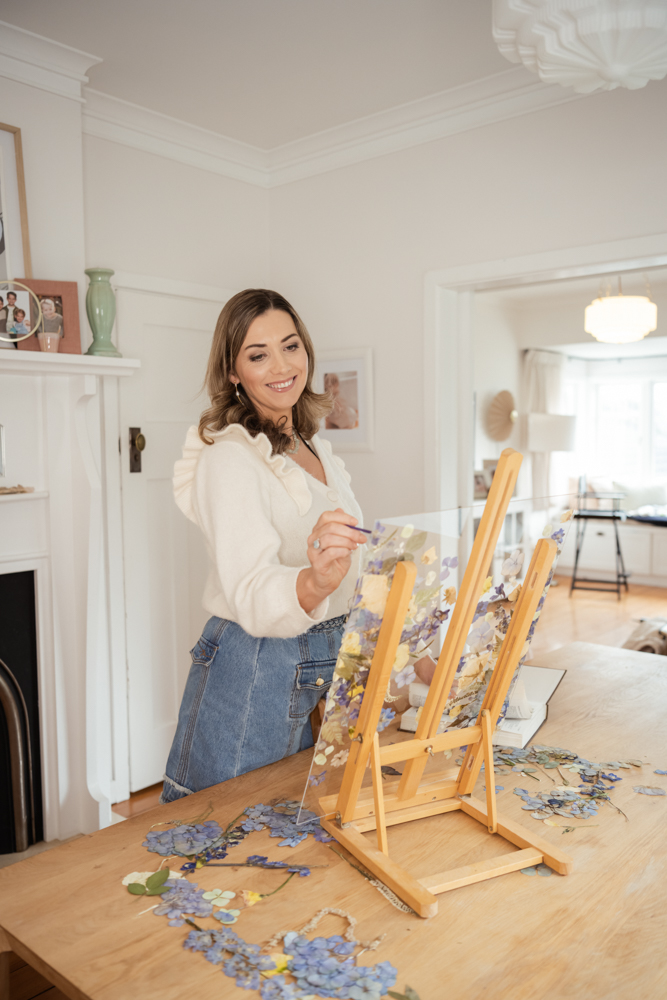
Every beautiful bouquet needn’t be swept into the bin when it’s past it’s used by date. Wellington artist Carolyn Austin says there is a quiet satisfaction in flower pressing as a way to capture the story behind the bouquet. The founder of Forever Floral Press, where she presses flowers into keepsakes, says the memories should outlive the occasions which produced them.
‘Pressing flowers is storytelling,’ she says. ‘It’s evoking an emotion, a memory, or a day, or a special person in your life. It’s a reminder, a sentiment, a passage of time.’ Pressing is having a moment. After some decades filed away alongside doilies and crocheted tissue-box covers, the craft has found itself a new audience, with millennial’s drawn to the practice of creating hand-made slow art. Or alternatively, commissioning Carolyn to create their treasured piece for them.
Her commissions cluster at the two ends of a life – the bridal bouquet and the memorial arrangement, the beginning of something and the end of it.
What arrives at her door is almost always at the end of its natural life – a bouquet that is a day or two past its best, wrapped carefully and couriered in hope.
The finished pieces take a number of forms. Her work is constantly evolving, presented across mediums from paintings through to floating frames, the latter suspending pressed botanicals between panes of glass so light passes through the petals and the wall behind shows faintly at the edges. Hung well, a floating frame reads less like a preserved object than a suspended one, as though the arrangement has simply paused mid-air. A beautiful alternative to fresh flowers, as she describes it, and a considerably longer-lasting one.
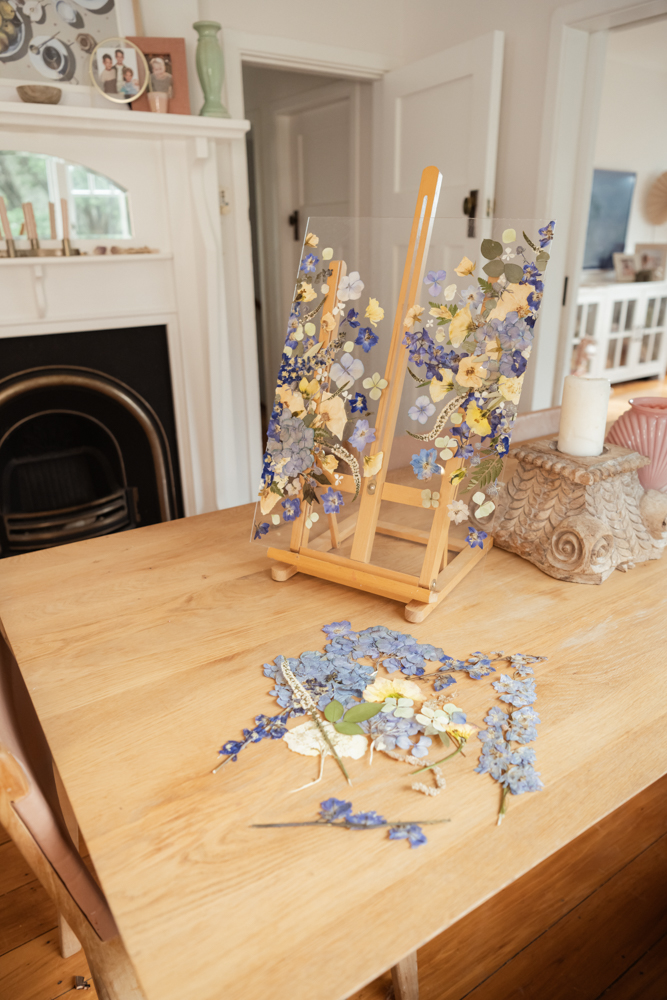
‘Some want the bouquet centred and traditional, held much as it was on the day, the shape of it intact. Others prefer something more adventurous, an abstract scattering of blooms across the frame, the arrangement dismantled entirely and rebuilt as pattern rather than posy.’
She’s glad to be told which, and encourages people to say so early. Where there’s no strong preference, she composes by instinct, working with the best of what has pressed well and arranging petals so they complement one another rather than compete.
If you want to try at home, this is a craft project with no barrier to entry – no studio, no kiln, no expensive kit and no classes to sign up for. A heavy book, a few sheets of newspaper and a warm dry corner will get you started this weekend, with flowers from your own or someone else’s garden.
For those who’d rather learn alongside someone, Carolyn runs hands-on workshops taking participants through selecting, pressing and preserving flowers, with tips for getting the best from each. Everyone then arranges their own pressed botanicals into a modern floating frame to take home. It’s pitched at beginners and at anyone with a creative streak, relaxed rather than exacting, and you leave with a finished thing rather than a set of instructions and good intentions.
The rest is patience. Flowers press on their own schedule and there is no persuading them otherwise.
As Spring approaches and the wedding season unfolds, find the joy in setting a few of the best blooms aside well beyond the vase.
Carolyn Austin has a workshop as part of 2026 Garden Marlborough, an engaging introduction to flower pressing. gardenmarlborough.co.nz
How to Press at home
You’ll need: a thick book with non-shiny pages (an encyclopedia is ideal – coated stock won’t let moisture escape), newspaper, several more heavy books for weight, a floating frame and glue.
Pick your blooms. Flatter flowers press best, so start with pansies, cosmos, hydrangea florets or anything naturally two-dimensional. Bulkier heads, such as roses, can be pulled apart and pressed petal by petal, then rebuilt later. Choose flowers at their peak – pressing preserves what’s there, it doesn’t improve it.
Open your book roughly in the middle and lay down a sheet of newspaper. Arrange the flowers on it, as flat as you can get them, with space between each one so nothing overlaps. Cover with another sheet of newspaper.
Close the book gently and stack additional heavy books on top. The weight does the work.
Store somewhere warm and dry. A hot-water cupboard, a sunny shelf, the top of a bookcase.
Check daily. You’re watching for moisture in the newspaper – if it’s damp, swap it for a fresh sheet and re-weight. This is the step most people skip and the reason most first attempts go brown.
Once fully dry, lift the flowers out slowly. They’ll be fragile.
Glue each one individually into a floating frame, available online or from craft stores, and hang somewhere out of direct sun.
Or commission Carolyn to press your bouquet – foreverfloralpress.com/how-it-works