As Nature Intended
Hidden just minutes from Wellington’s vibrant city centre, Zealandia Te Māra a Tāne is a world-leading ecosanctuary where rare native wildlife thrives in a regenerating, forested valley. It is a place where kākā chatter overhead and kiwi roam at night.
-
- Zealandia Te Māra a Tāne, located in central Wellington, is one of the most extraordinary conservation projects in Aotearoa. Photo Emir de Souza
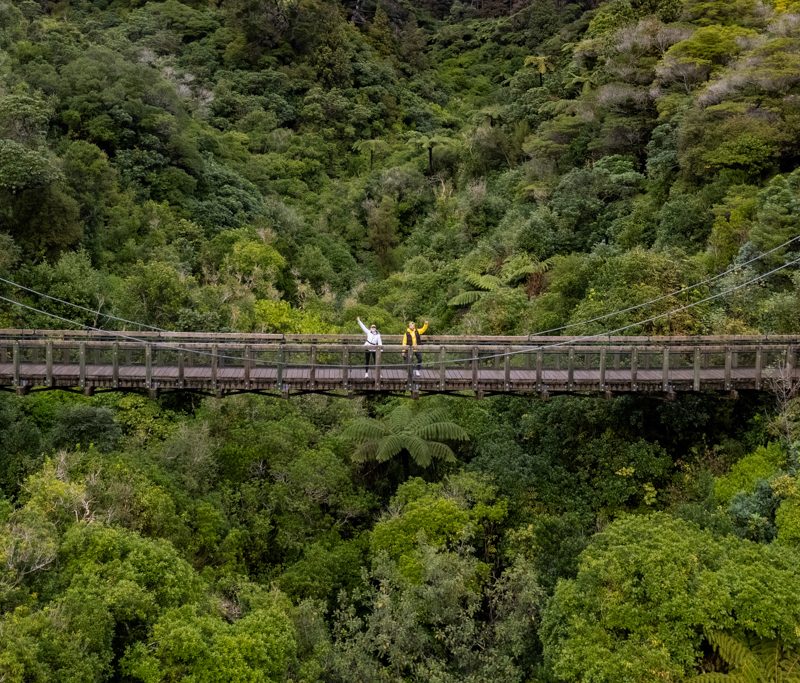
Only a few minutes from Wellington’s café-lined laneways and creative buzz lies one of the most extraordinary conservation projects on the planet. Zealandia Te Māra a Tāne, the world’s first fully fenced urban ecosanctuary, spans 225 hectares of regenerating forest and shimmering freshwater habitat. For visitors, it offers something rare: the chance to encounter some of Aotearoa New Zealand’s most endangered and charismatic species, not in a remote sanctuary, but within two kilometres of the capital’s CBD.
The idea that Wellington would become a global beacon for biodiversity seemed improbable just a few decades ago. The arrival of Europeans had brought widespread deforestation and the introduction of mammalian predators that devastated native bird and reptile populations. By the 1990s, species such as tūī and kererū were clinging on, with only a few breeding pairs in the region, while many others had vanished entirely from the mainland.
It was an ambitious proposal by conservationist Jim Lynch and a dedicated group of locals that set change in motion. Their vision: fence an entire valley, eradicate every introduced mammal within it and rebuild a thriving ecosystem from the forest floor up. A decommissioned Karori reservoir provided the location, and in 1999 an 8.6-kilometre predator-exclusion fence – ingeniously designed with a curved top hat, buried mesh skirt and tightly woven panels – sealed the sanctuary from unwelcome predators. It was a world first.
Zealandia’s founding vision spans 500 years, but already, just a quarter-century on, the transformation is astonishing. Birds, once considered lost to Wellington, now flourish. Kākā, once absent from the region for more than a century, screech overhead in suburban backyards; Tūī chatter from street trees and kererū cruise between patches of bush with the nonchalance of regular commuters.
Inside the sanctuary itself, life abounds. More than 40 kiwi pukupuku (little spotted kiwi), released in the early 2000s, have multiplied to over 200, enough for the first-ever translocation from Zealandia to another sanctuary in 2025 – an extraordinary full-circle moment. Hihi/stitchbird, tīeke/saddleback, korimako/bellbird and the tiny tītitipounamu/rifleman flit through the canopy. Takahē, once thought extinct until rediscovered in 1948, stomp through the undergrowth. On sunny days, tuatara bask on warm rocks – the first successfully established wild mainland population, thanks to an historic gift of 200 individuals from Ngāti Koata.
-
- Kākā are just one of the many species of birdlife visitors will see (and hear) when visiting.
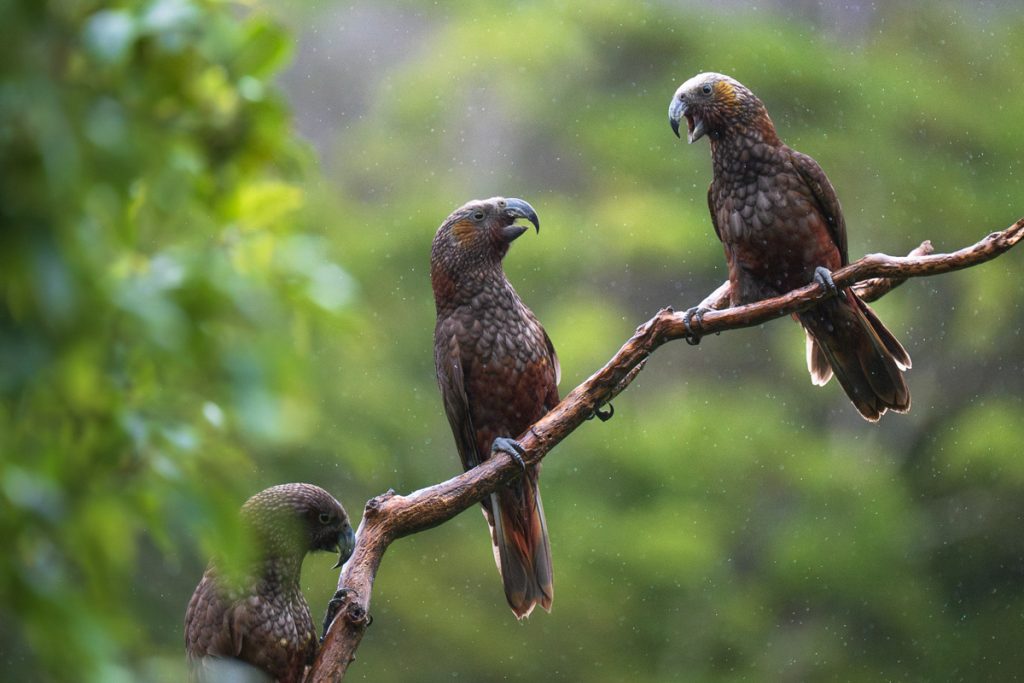
More than 136,000 people now visit each year, exploring 32 kilometres of trails that wind from lakefront wetlands to high ridgelines with views across the city. Whether you spend a couple of hours among the lower-valley meandering trails or a full day disappearing into wilder corners of the upper valley, no two visits are alike. Wildlife here is free to roam, forage, hide and surprise.
For those wanting more of an educational experience, by day, expert guides reveal the behaviours and quirks of bird and reptile residents; while by night, torchlit explorations uncover glow-worms, wētā punga/Cook Strait giant wētā, ruru/morepork and – for the lucky – kiwi on the move. Proceeds directly support conservation, meaning every visitor quite literally helps the sanctuary thrive.
Zealandia’s success doesn’t stop at the fence line. Working alongside mana whenua, community groups and researchers, the sanctuary leads the Kia Mouriora Te Kaiwharawhara Sanctuary to Sea project, a 100-year vision to rejuvenate the entire Te Kaiwharawhara water catchment from forest source to harbour mouth. In recent years, native freshwater fish like toitoi/common bully have been reintroduced after a long absence, another milestone in ecological renewal.
Wellington is one of the few cities in the world where bird biodiversity is increasing. It is a living example of what can happen when communities commit to restoring nature, and a reminder of the resilience of the environment in Aotearoa when given the chance to recover.
For visitors, Zealandia Te Māra a Tāne offers not just an encounter with wildlife, but a glimpse of hope, an immersive, heart-stirring experience in a place where the future is being rebuilt, one birdsong at a time.
-
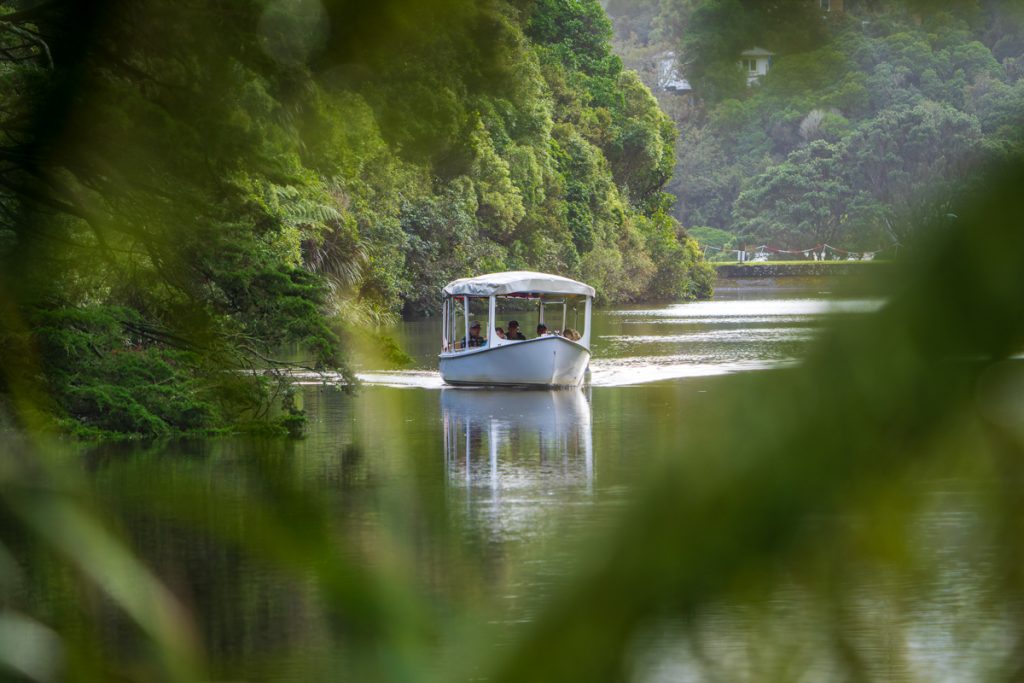
- The Ara Kawau electric boat is a wonderful way to experience Zealandia for those wanting to have a break from walking the many and varied walking tracks. Photo Scott Langdale.