A Toast to Tenacity
Often brilliance is driven by a touch of madness and Central Otago is renowned for mad pioneers that forged paths into unfamiliar territory to achieve beautiful outcomes. Ryan Sanders and Marco Creemers have embodied this pioneering spirit with their grand renovation of Earnscleugh Castle.
Words Sarah Perriam-Lampp Photos Sophie Bayly
Greatness is always built from grit. Perseverance is the power to progress. The history books tell us about those that mastered this skill. Those who built and lost, and those who mastered when enough was enough.
Marion Spain, wife of Stephen Spain, was the one who encouraged her husband to take on seventy thousand acres of abandoned, rabbit-infested sheep-country at Earnscleugh, between Alexandra and Clyde. It was madness. The last leaseholder had walked off the property, abandoning it to the Crown after a bitter winter took out half his flock and rabbits had grazed the land bare. Ambitious and determined, she coaxed him from a stock-and-station agent towards a massive fortune, exporting canned rabbit meat to World War One troops.
But the small woman of Irish-Gypsy descent put her foot down when Mr Spain’s new-found wealth saw him get carried away with the dream of building a castle. It was a far cry from the man born in a tent on the banks of the Clutha River near Roxburgh in 1862, the year of the gold rush.
Marion was outspoken and fiery-tempered about the project as she couldn’t see his reason for building such a large house. Wild as her thick black hair, she declined to have anything to do with the build. She refused to move in, remaining firmly ensconced in the old homestead until months later when she was finally coaxed into the 21-room home by her family.
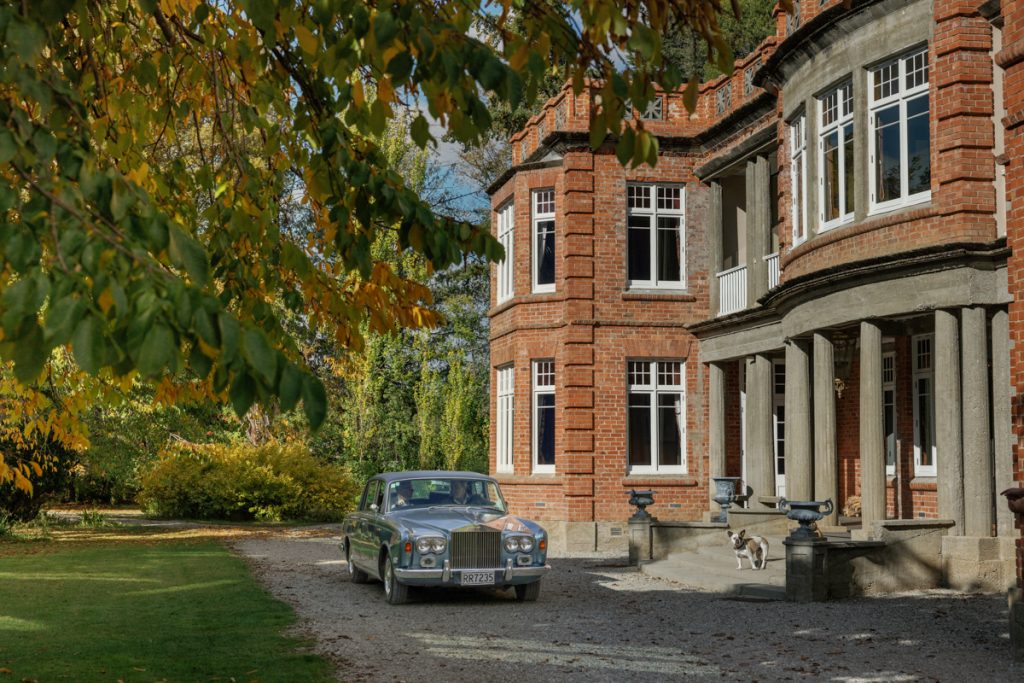
The building was never completed. The original designs show it with a plastered façade covering much of the brick work and the concrete pillars. Spain ran out of money when Britain’s market was flooded with canned meat in the 1920s and his rabbit-canning factory was closed in 1924. The subsequent Great Depression also hit his investments and rabbits once again flourished at Earnscleugh.
Heritage New Zealand calls the building ‘a tangible manifestation of that tendency of New Zealand runholders to indulge in displays of conspicuous consumption’.
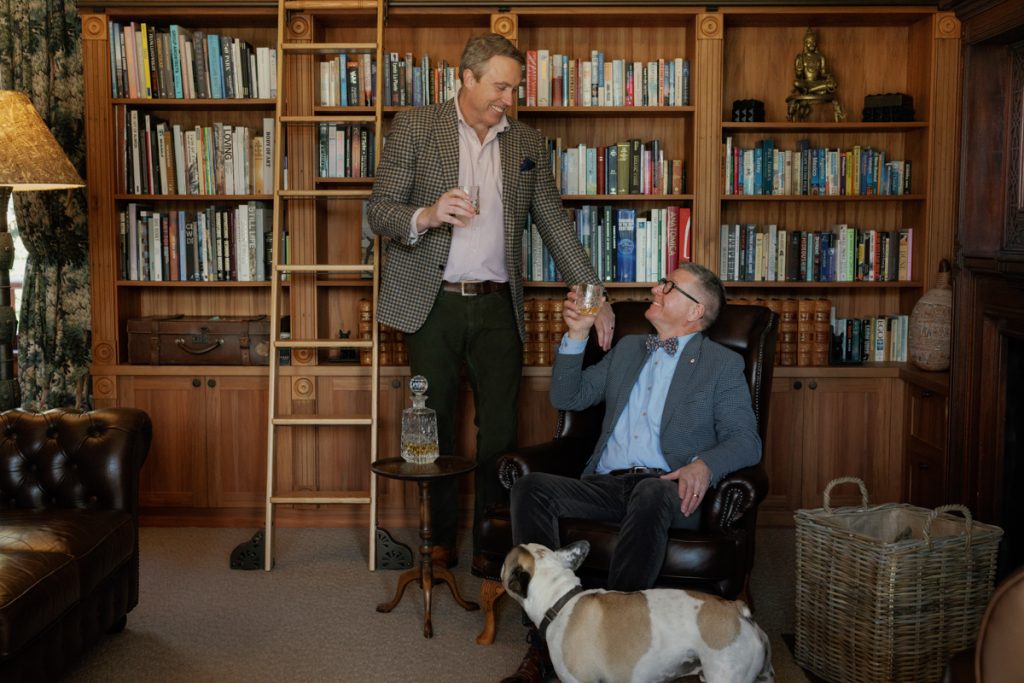
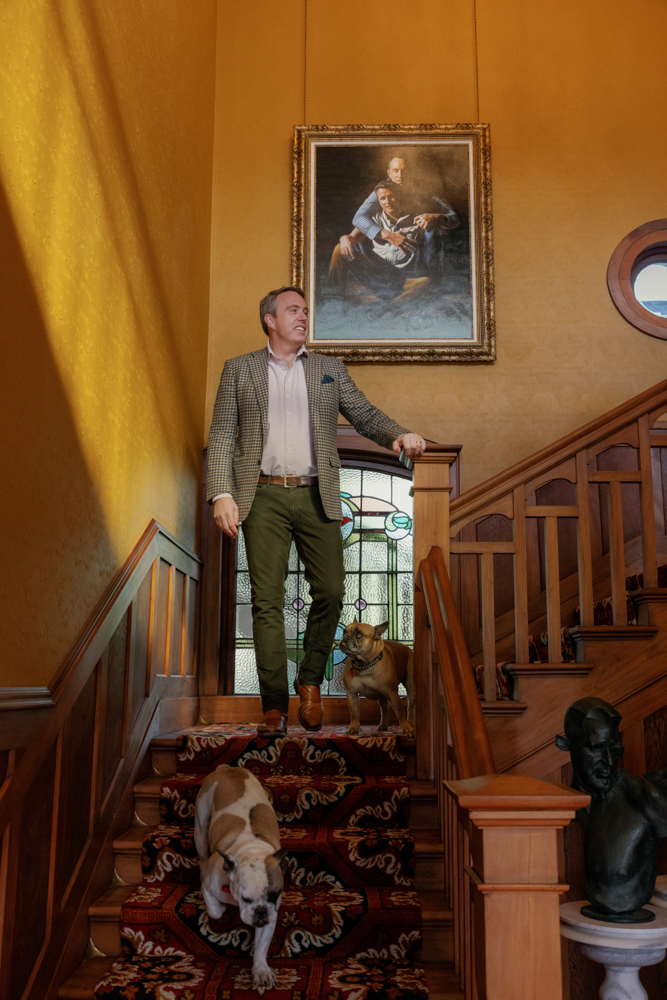
One hundred years later, Marco Creemers and husband Ryan Sanders stand in the upstairs window of the landing reflecting on what Spain would have thought of their mammoth four-year-renovation. For Marco, he wonders
if finally ‘dressing the old girl’ was the grandeur Spain strove for.
The castle achieved another piece of history when the couple featured in April 2026 on TVNZ’s Grand Designs programme, showcasing their $11 million blow-out, a record over-budget for the show.
The red brick Jacobethan building has been a national talking point since; however, for Ryan and Marco, it’s been a homecoming. ‘I feel like I belong here,’ says Marco.
On a still, warm Central Otago autumn morning, the kind where the sky is a hard, endless blue and your breath hangs in the air, Earnscleugh Castle stands proud behind the men as their symbol of everything they’ve built together. ‘I love those days when the air is deadly still and you feel that coldness on your face,’ says Ryan, who was determined to get back to the South Island after living in the couple’s penthouse apartment in Auckland, previously featured in Life & Leisure.
What credentials do you need to take on an unfinished, chillingly-cold castle in a small town? For this couple it was blue-sky dreaming, a passionate love for history and an enduringly optimistic mindset.
‘Kids spend a lot of time daydreaming as they have an in-built sense of wonderment,’ shares Ryan. ‘We lose that as adults.
‘I think it’s important to remove all the shackles, daydream, figure out what gives you those butterflies in your stomach – and then chase after that aggressively. Because actually, what else is everything for? What is life for?’
Ryan grew up in Canterbury and spent his OE playing semi-professional rugby in the UK in the early 2000s. Post rugby he went on to work in recruitment for a global bank but struggled with the lack of autonomy and knew that starting his own business would provide the freedom he craved. He put his life savings into starting a tourism business, Haka Tours, in 2007, getting a head start on the tourism boom of the 2010s. In 2019, Deloitte named Haka Tourism Group New Zealand’s fastest-growing tourism brand. Ryan sold Haka Tours, which enabled the purchase and initial renovation of Earnsleugh Castle, but still retains shareholding in other companies he has founded including Haka House Hostels, Drifter and Haka Educational Tours.
With their business acumen and experience with project management of historic buildings under their belt, the men embarked on giving Earnscleugh Castle ‘the finish she deserves’.
At the time of discovering the property listing, Marco was the general manager and projects director for 32 years for the Friedlander family’s Samson Corporation, one of the largest commercial property owners in Auckland, with a portfolio that includes a fair number of heritage buildings and sustainability accolades.
The mansion had been vacant for seven years, resembling a ‘really bad student flat,’ with rotting carpet, black mould, collapsed ceilings and greenery growing in the cracked swimming pool. With Marco’s experience, he went in eyes wide open, knowing this would be a painstaking restoration.
As the building is a category 1 heritage listed landmark, before they so much as lifted a paintbrush, every inch of the house was documented with Heritage NZ.
Marco struggled with how rigid the stakeholders in the castle’s history were and the hold they wanted on a fragment of the past. ‘People get hung up on preserving one moment in time in history,’ he explains. ‘If you study manor homes in England, the seventh Earl comes along and guts a whole mansion and makes it all Baroque. Two centuries later, someone else guts it and makes it all Georgian. When is the correct moment to cement things in history?’
The frustration lay with Central Otago District Council’s official line that the castle’s ‘unfinished status’ was itself historic – something to be preserved. Whereas they saw something different: an opportunity to finally complete the architect’s vision while quietly weaving in 21st‑century structural and sustainability upgrades.
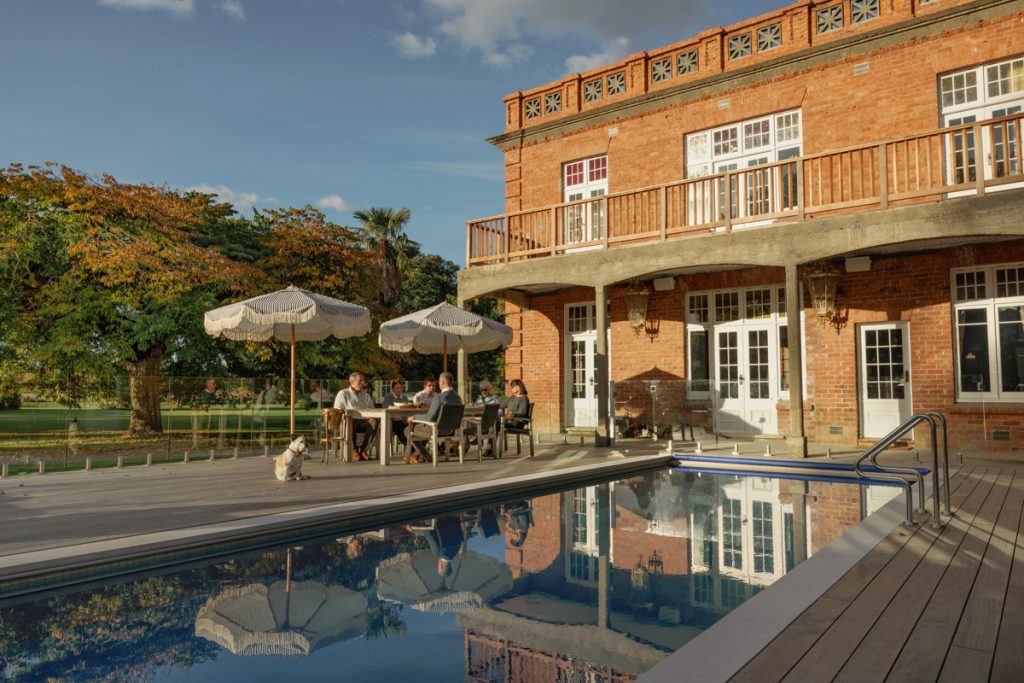
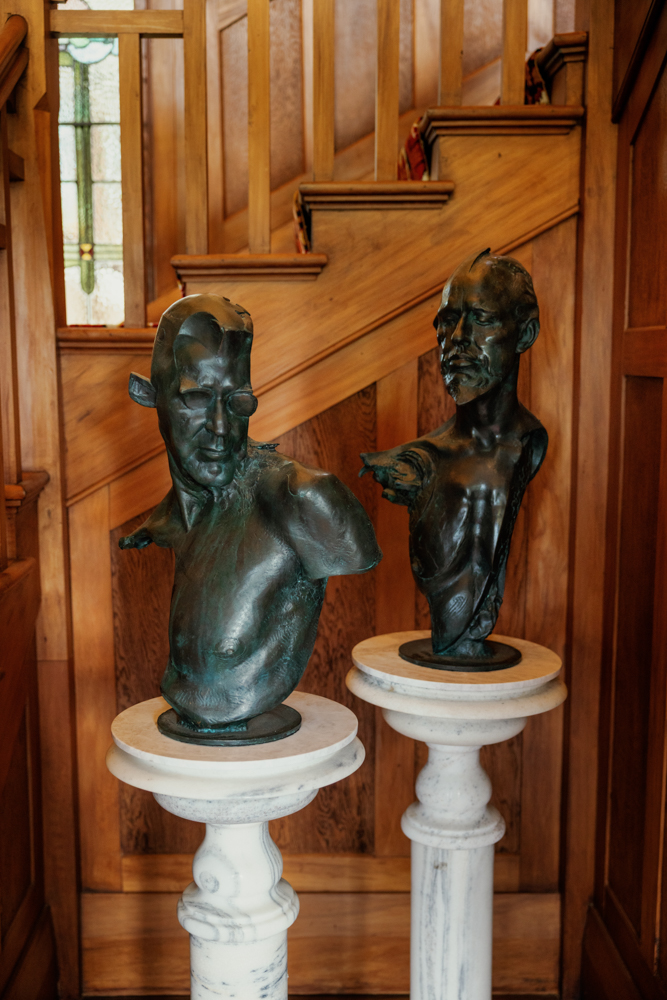
For all the romance of turrets and libraries, Earnscleugh Castle has been deeply modernised. Starting with 18 months of earthquake strengthening, she also required a new roof to make the building weathertight, re-wiring, insulation, installing sprinklers and stripping and staining the original woodwork – a mix of rimu, oak, oregon and redwood.
They were told by a local that lived there that they used to turn the heaters on in March and off in November. Heating the 10 bedrooms and multiple living spaces was going to be crucial for the harsh winters. Achieving their energy demands sustainably was non-negotiable for Marco. Marco, in his career as a project manager, had achieved New Zealand’s first 6 Green Star NZ Office Built V1 Certified Rating. ‘We wanted to have a sustainable footprint and be fossil‑fuel free,’ he says. ‘So our energy design had to be net zero.’
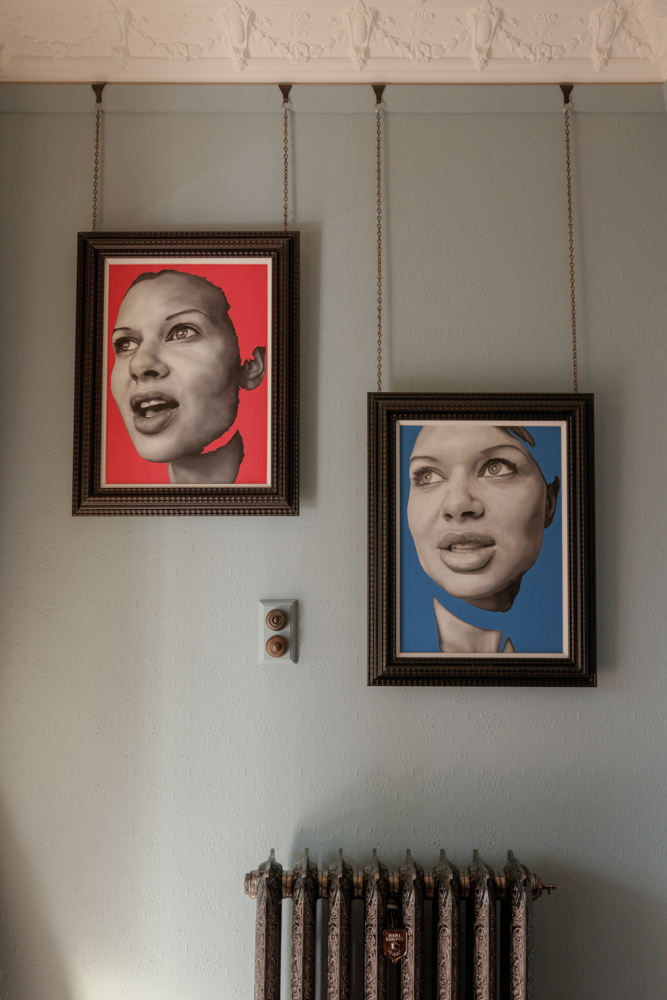
Initially, energy consultant Steve Jarvis of Thermal Consultants, designed a classic ground‑source system. But the costs spiralled. He then suggested using the natural resource of the free-flowing Fraser River on their boundary to conduct electricity from a heat exchanger system. ‘We have a guaranteed‑flow river in the summer so there’s always going to be water.’ Marco explains that electricity bills went from a predicted $55,000 per year to a hopeful $1,500 once the full design is completed. This ingenious solution, along with 216 solar panels which are due to be installed later this year, will power the castle’s 32 radiators, fueling that enveloping warmth visitors remark on the moment they step inside.
For a large landmark, it is surprisingly homely. Marco’s design process, with a physical moodboard, kept his eye focused on creating not only a unique feeling in each room but a thread of style throughout. Traditionally used in grand, historical architecture, Earnscleugh was built with an enfilade – creating a vista through the entire series of rooms with doorways that perfectly align – drawing your eye down through the home.
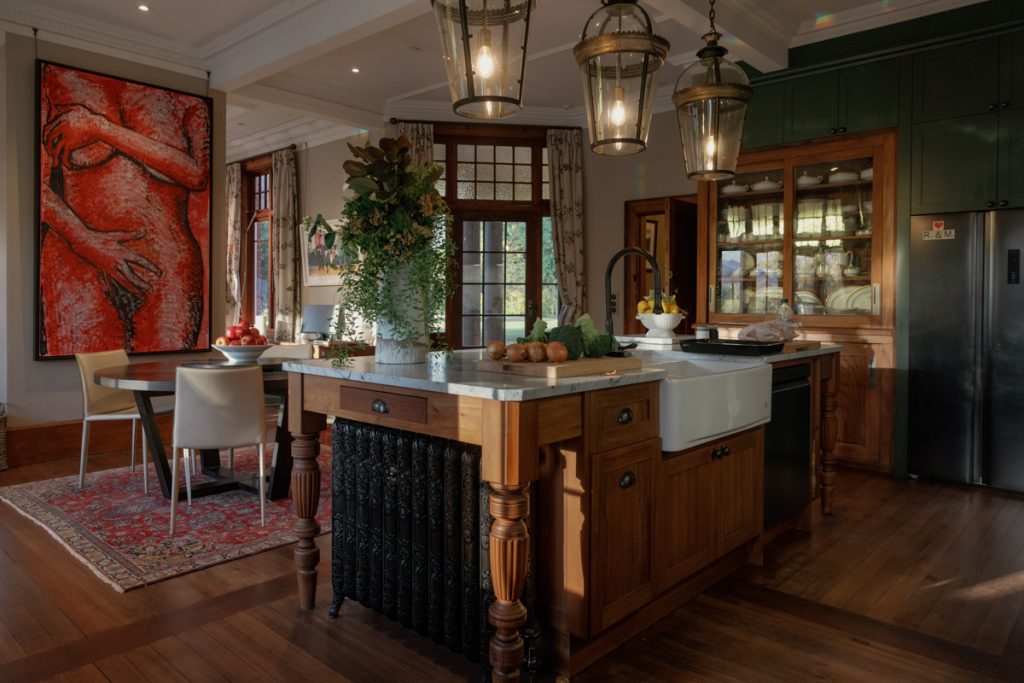
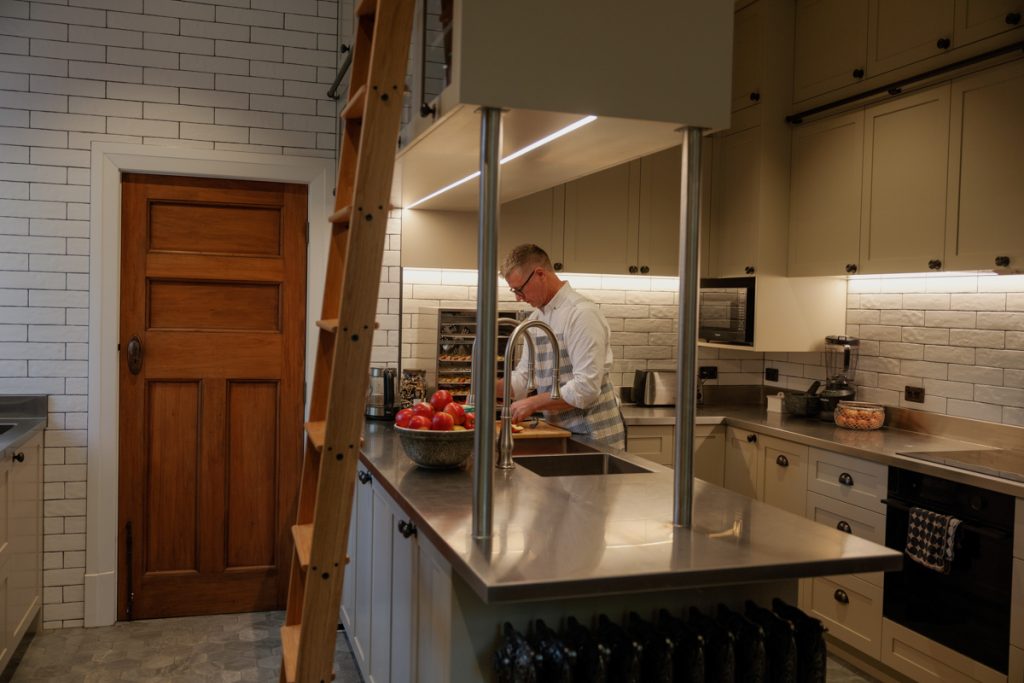
Many rooms, particularly those used as the servants’ quarters, were small and pokey. Under the guidance of architect Richard Naish from RTA Studio, they removed internal walls on the ground floor, turning five former staff rooms into an open-plan kitchen and lounge.
The original design used exterior balconies to get to the bedrooms with no hallways. At the time, Mr Spain had seen the devastation of the Spanish flu and it was believed that regular access to fresh air was required for hygiene against disease. To bring the castle into the 21st century modern way of living, the addition of french glass doors along the balconies were installed to avoid their guests needing to go outside in winter. ‘It’s big, but it’s got quite an intimate feel.’
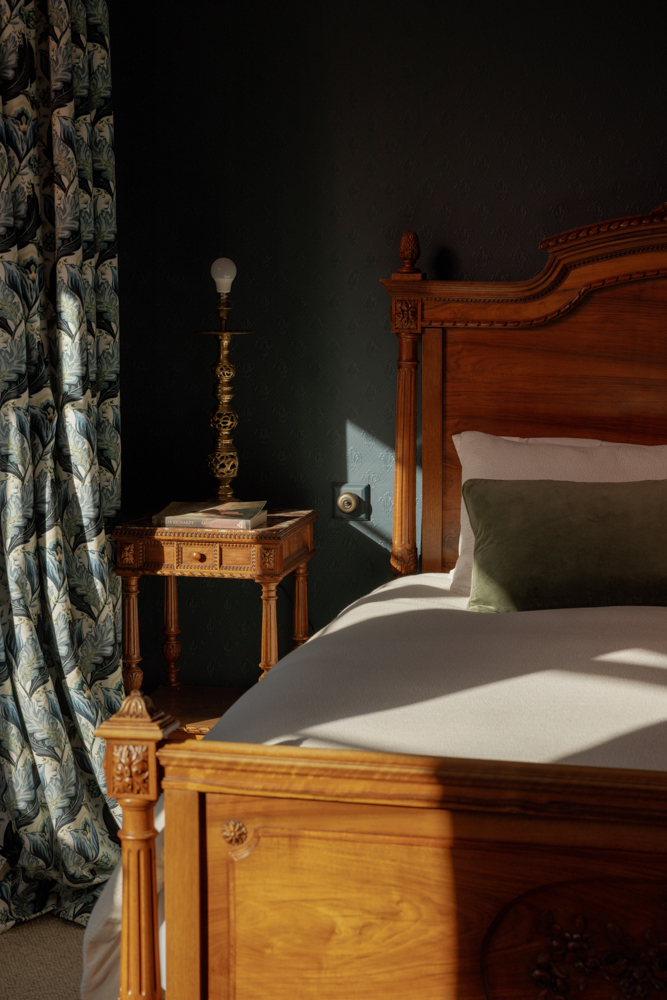
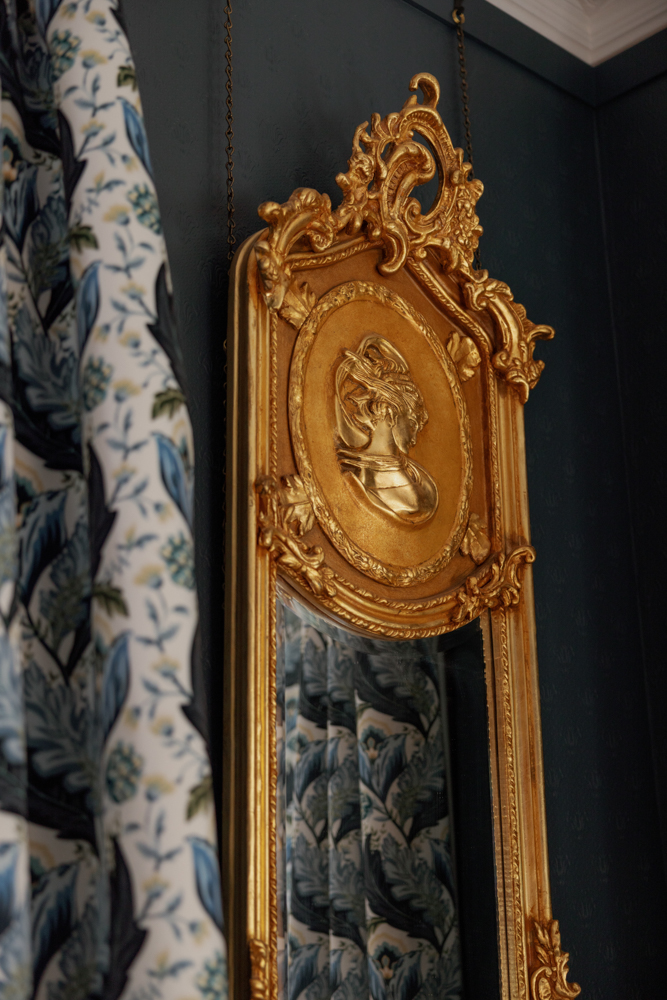
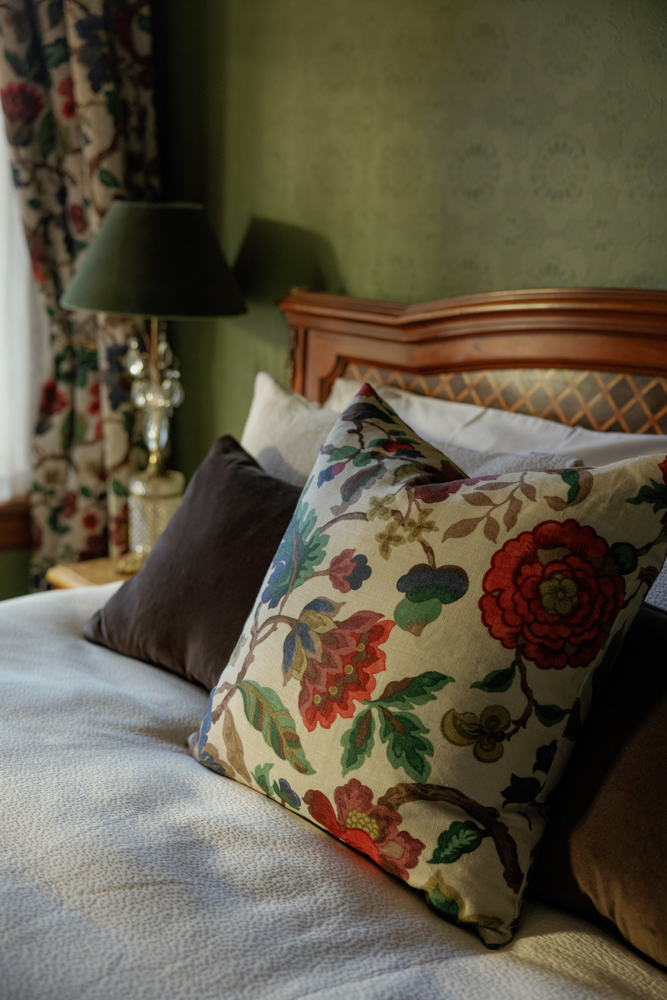
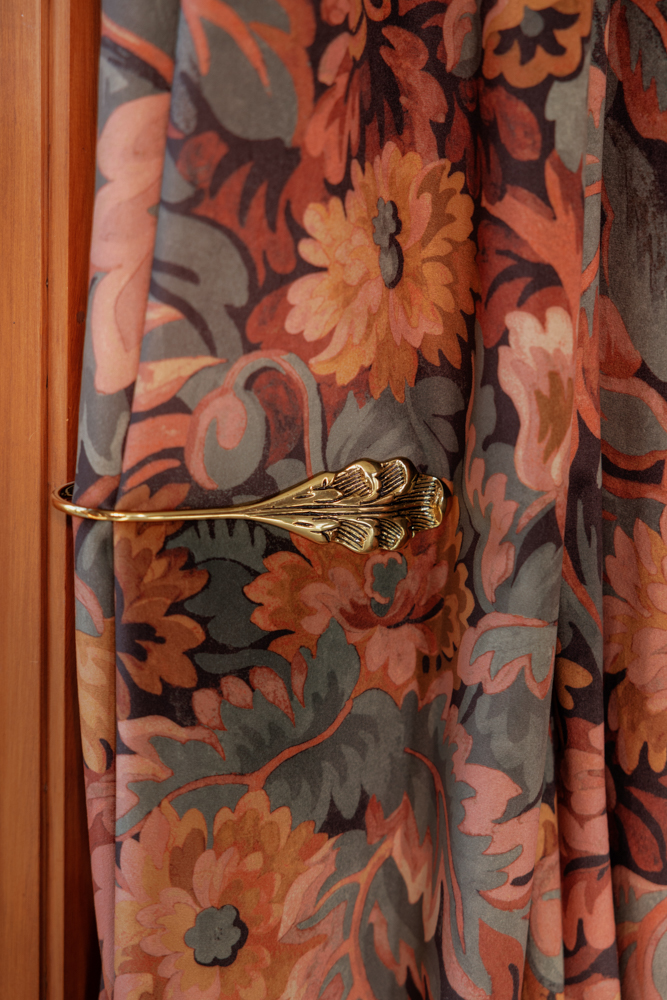
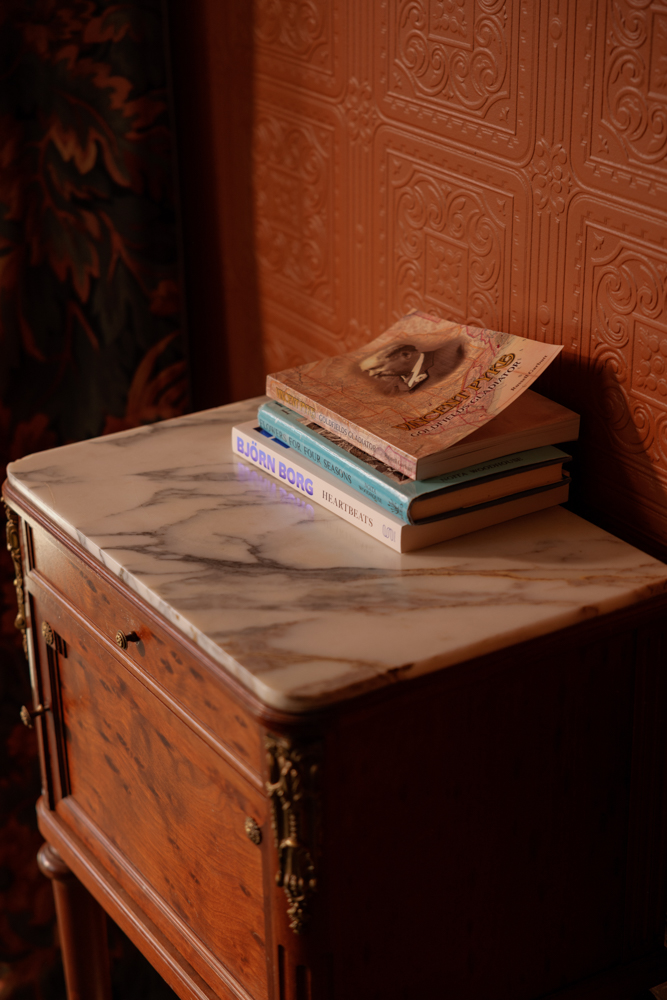
Interior Designer, Stuart Harris from Macintosh Harris, sourced the embossed Anaglypta wallpaper and the velvet floral curtains that were centred around a distinct bold hue in each room from an overall vibrant palette of gold, red, mustard, copper, deep blues and olive greens.
Each room is beautifully dressed with antique furniture and chandeliers imported from England and Europe. The central staircase sparkles with its striking 294kg French chandelier on a hoist.
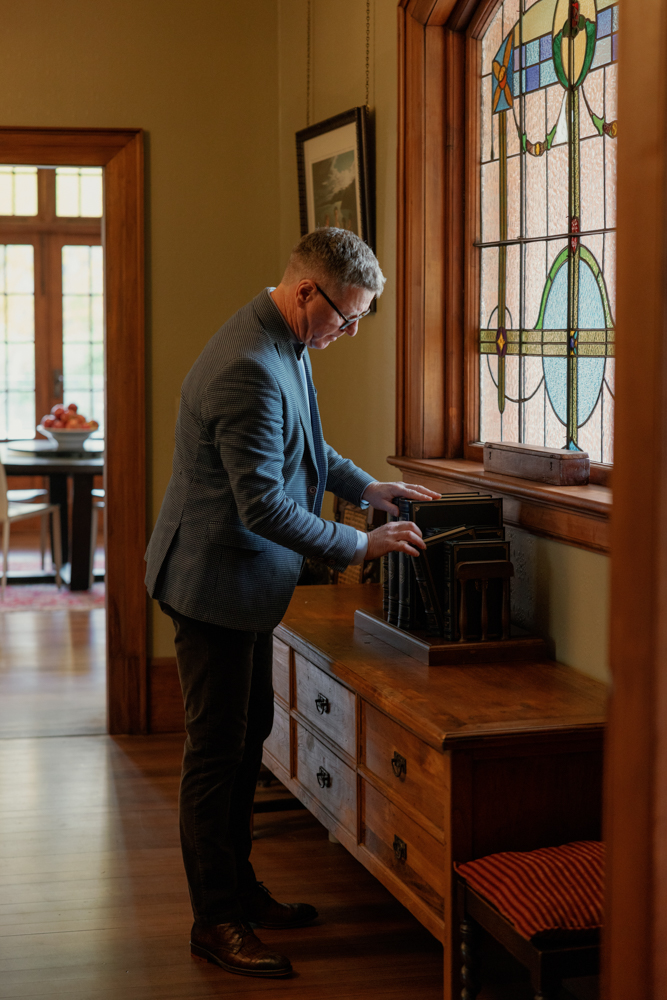
‘My favourite room is the library. It’s where I retreat to,’ says Ryan. The bookcases were salvaged rimu from a heritage building following the Christchurch earthquake.
The castle has been a central talking point in the area since its completion. Ryan and Marco have been busy with endless tour groups coming for a glimpse at the record renovation budget in real life. ‘We were really concerned because we didn’t want to split the community and have half the local community hate us,’ says Marco. ‘I’ve never in my life had anything quite like it, 100% support, we were just gobsmacked,’ Marco says.
Locals didn’t just cheer from the sidelines; they rolled up their sleeves. For Marco, who grew up in a small farming community north of Auckland, moving south felt less like a sea change and more like stepping back into something he’d lost, with true community characters. Like Penny and Lindsay.
When the project stalled in 2023 due to a declined resource consent, former Queenstown Lakes District councillor, Penny Clark, who was nearing the end of her sixth year on the council, read about the Earnscleugh Castle project in the newspaper.
‘I knew that council voting was going to come up and I thought I can’t manage another three years of this bureaucracy,’ she said. ‘I saw the guys in the paper and thought, ‘that’s got my name written on it’, so I rang them and said I’m coming to help.’
The 75-year-old sold her house and moved on site with her caravan. Penny is now still found somewhere around Earnscleugh Castle’s sprawling 30 acres of lawns and gardens, keeping them respectable. Raised on an estate in North Devon, England, Penny had a bold career in hotel management so she is naturally excited about the vision for turning Earnscleugh Castle into a private hotel-wellness spa.
‘Lady Penelope – the lady that’s never yawned. She’s an energiser bunny. She needs this place just to burn off that energy!’ says Ryan.
Ryan tells the story of a retired car salesman, Lindsay from Invercargill, who moved to nearby Clyde and just turned up to start painting.
‘It got to a point where Lindsay had been in the house for four hours and Marco would find him and he’d painted a whole wall,’ explains Ryan. ‘Then we figured out he’s a muso and plays a really cool acoustic set. So he has been coming and playing music for our gatherings and for our family at Christmas. My dad’s already booked him for his 80th!’
It’s not hard to see why locals are loving the gentlemen behind the famed Earnscleugh Castle. When you meet Marco and Ryan, their humble, kind and hospitable nature is evident.
For all their audacity, they’re deeply wary of the endless ‘what’s next?’ that often follows a big achievement.
While Ryan and Marco are excited about developing a luxury wellness retreat brand, Sanctum 7, and hosting high end private business events and film sets, it is important that the property is still very much their home.
‘We’ve always said, if we had to do all of this again – live apart for nearly three years, sell things, ride that complete roller coaster – we’d do it again for this place in a drop of a hat,’ says Ryan. ‘But would we ever do this again for another property? No way. Never. The toll was too big.’
‘You have to reach a point where enough is enough and really soak in what you’ve got and enjoy it,’ he concludes.
Maybe a lesson Mr Spain should have learnt.
Heritage Renovation Tips with Marco Creemers
Be deeply passionate about the project. A heritage restoration demands far more love, time and emotional energy than you can imagine – passion iswhat carries you through the inevitable challenges.
Honour the architecture – add modern conveniences where you can so you can use the building, but it must fit and not fight the original design or lose the character of the place.
Don’t sweat the small stuff. The heritage approvals are hard to get and you will never get everything you want, so be prepared to make compromises on the design. You will laugh at what they won’t approve and it will never make sense.
Connect with others who have done it before. Reach out to people who have completed similar heritage projects. Their learnings and practical advice are invaluable.
Assemble the right team. Surround yourself with experienced heritage architects, builders and specialists who truly understand historic properties and respect their significance.
Build in significant contingency. Accurate quantity surveyor costings for heritage work are notoriously difficult. Always add a substantial contingency budget to protect against unexpected discoveries.
Bite size chunks with end the goal always on your mind. During the Reno, take things one step at a time, otherwise you will get overwhelmed with what you still have to do. Celebrate the completion of each part, either in a small way, pat on the back or a beer or bbq with the builders.